
Three months ago I had a problem most solo apartment cooks know well: I kept making too much rice on the stovetop, burning the bottom half of it, and then eating mediocre leftovers for three days out of guilt. A friend suggested the Dash Mini Ceramic Rice Cooker. I thought she was joking. It looked like a toy. I bought it anyway, mostly because it cost less than two takeout meals and I had exactly four inches of free counter space next to my toaster. That was twelve weeks ago. The machine has not moved since.
What followed was three months of daily cooking in my 340-square-foot studio in Portland, Oregon. I am a one-person household. I cook for myself five or six nights a week. I am not a food writer or a professional chef. I just want dinner to work without turning the kitchen into a project. That is the lens this review is written through, and if any of that sounds familiar, keep reading.
The Quick Verdict
The Dash Mini Ceramic Rice Cooker is genuinely excellent for solo cooks in small kitchens. It makes consistently good rice, cleans up in about 90 seconds, and earns its counter space without taking over. The only real gripe: brown rice takes almost 50 minutes, and the machine runs warm on the exterior during the keep-warm cycle.
Amazon Check Today's Price →Still burning the bottom of your stovetop rice? This is the fix.
The Dash Mini has over 47,000 reviews on Amazon for a reason. If you cook rice for one or two people more than twice a week, it pays for itself in time and frustration saved inside the first month.
Amazon Check Today's Price on Amazon →How I Have Used It Over Three Months
I want to be specific here because vague reviews do not help anyone. In three months I made white rice roughly 40 times, brown rice about 10 times, quinoa 6 times, steel-cut oats twice (yes, it works), and I used the included steam tray for broccoli and green beans probably 8 or 9 times. That is a pretty real-world sample for a solo cook, and it is the kind of use pattern this machine was clearly designed to handle.
My setup: I keep the Dash Mini on the counter to the left of my sink, which is the only spot in my kitchen with a power outlet within reach. It lives there full time because it fits and I use it often enough that storing it away feels pointless. The footprint is just under 7 inches across, which matters when your counter has four inches of wiggle room. The cord is short enough that it does not dangle down to the floor, which would have been a problem in my setup.
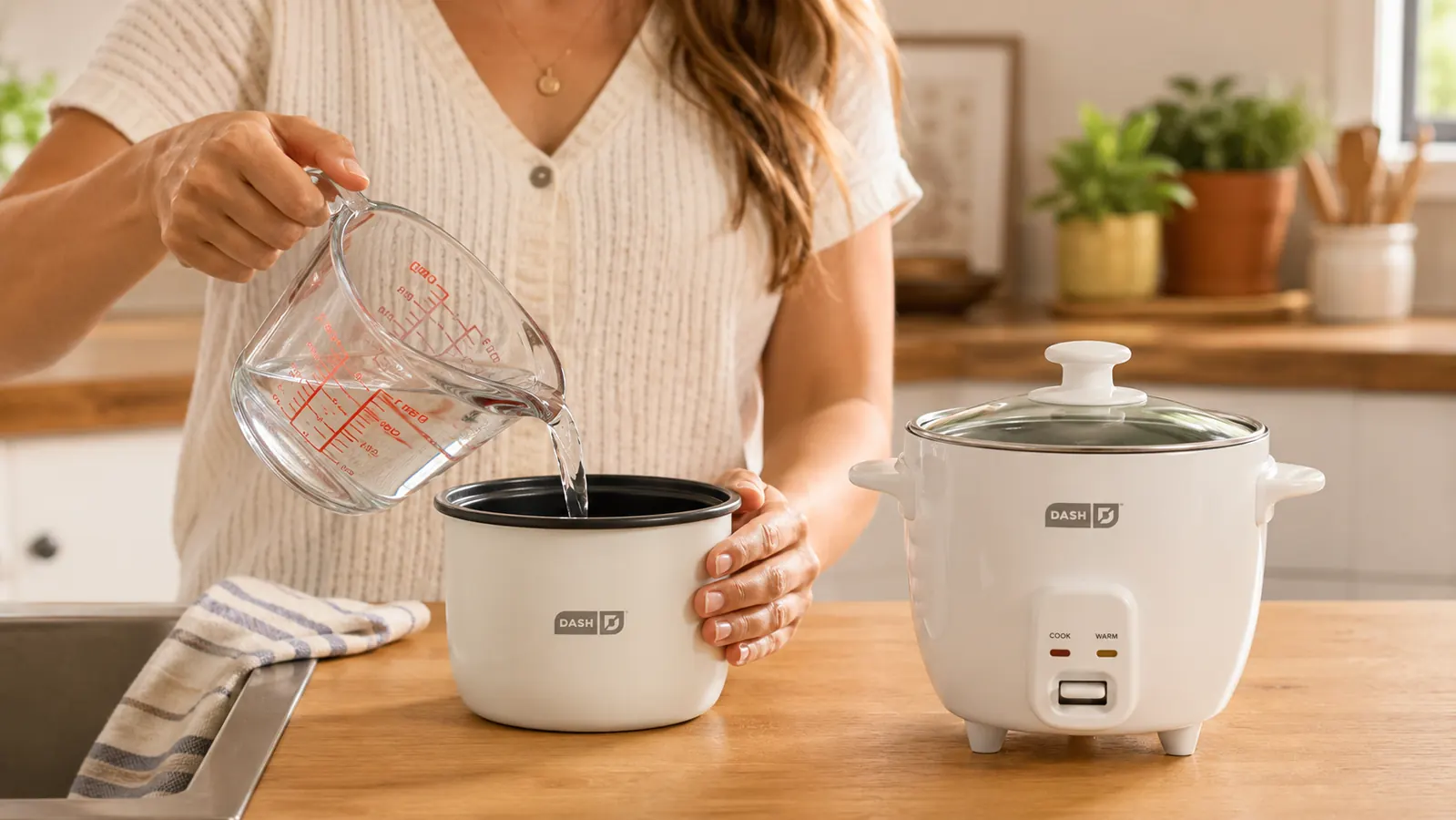
My routine: I measure water with the included mini cup, add rice to the ceramic bowl, close the dome lid, and press the single cook button. That is it. No setting a timer, no watching the stove, no guessing when to turn off the heat. The machine switches itself to keep-warm when the rice is done. I forget about it, come back in 25 minutes, and dinner is in the bowl.
Rice Quality: What the Dash Mini Actually Produces
Let me be direct: the rice this machine makes is good. Not restaurant-grade, not as nuanced as a high-end Zojirushi, but genuinely good, consistent, and better than anything I was producing on my stovetop in under 30 minutes. White rice comes out fluffy and separate, not clumped or gummy. The ceramic nonstick interior releases cleanly every time. I have never had rice stuck to the bottom the way it sticks to a pot on the stove.
I tested jasmine, basmati, and standard long-grain white rice. All three worked well with the same water ratio. Short-grain sushi rice required slightly less water (I landed on just under the 1:1.25 ratio suggested in the manual) but still came out nicely sticky and cohesive. Brown rice is the only type that took some calibration. The first batch was a little underdone at the standard cook time. The second batch I started and then manually toggled the cook button once partway through for an extra heat cycle. By batch three I had it dialed in at about 48 minutes total using slightly more water than the manual recommends.
The rice this machine makes is genuinely good. Not restaurant-grade, not as nuanced as a high-end Zojirushi, but consistently better than anything I was burning on the stovetop in 25 minutes.
The Ceramic Interior: Why It Matters for Daily Use
This is the detail that most reviews gloss over, so I want to give it proper space. The Dash Mini uses a ceramic nonstick coating on the inner pot rather than the standard PTFE-based Teflon coating you get on most budget rice cookers. If you cook in a small kitchen with limited ventilation, this is worth caring about. Ceramic nonstick does not release the same fumes that PTFE coatings can emit when overheated, and the surface holds up better to accidental metal utensil contact. For a machine that sits on a cramped counter in a small, often poorly ventilated apartment kitchen, that distinction matters more than it might in a large home kitchen.
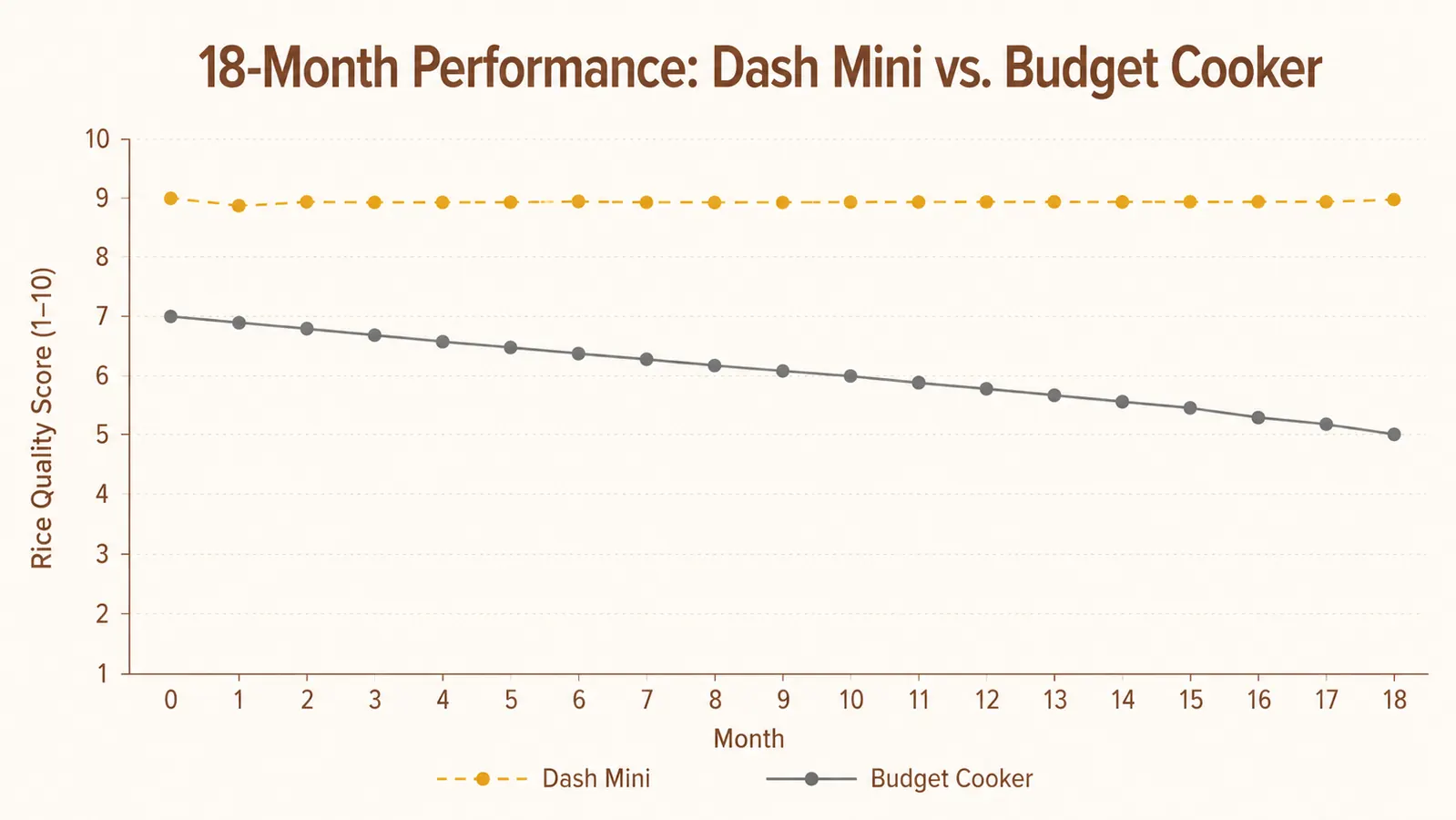
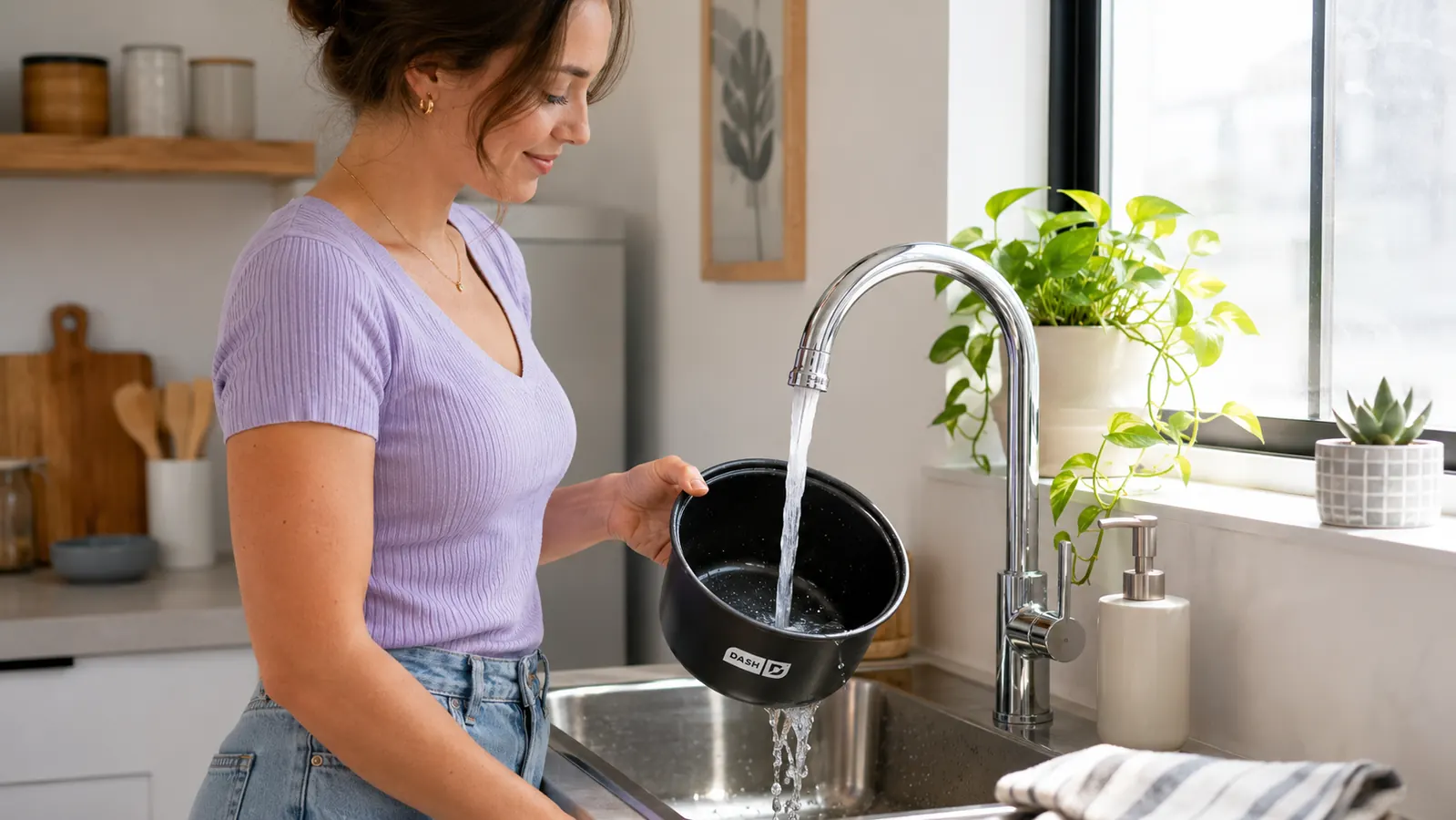
In three months of daily use, the ceramic interior still looks essentially new. I have not babied it. I use the included plastic paddle, but I have also reached in with a regular fork a handful of times when the paddle was dirty, and I see no scratching. Cleanup is a rinse and a gentle wipe. I put the inner pot in the dishwasher twice just to test it. It came out fine both times, though I now hand-wash it because it takes all of 30 seconds and there is no reason to run a full dishwasher cycle for one small pot.
Beyond Rice: Quinoa, Oats, and Steamed Vegetables
The included steam tray is a small plastic insert that sits above the cooking water. I was skeptical it would work, but broccoli florets come out tender and bright green in about 15 minutes while the rice cooks below. I have done green beans, carrots, and frozen edamame the same way. None of them came out overcooked or mushy. This effectively doubles the machine's usefulness for a solo cook who wants a grain and a vegetable ready at the same time, in a single 25-minute window, with only one thing to wash.
Quinoa works well at a 1:1.75 water ratio and takes about 30 minutes. Steel-cut oats took longer than I expected, closer to 35 minutes, and the texture was chewier than stovetop rolled oats but pleasant. The machine holds about 2 cups of cooked output, which is exactly right for one person plus a small container of leftovers for the next day's lunch.
The One Thing That Tripped Me Up: The Measuring Cup
The Dash Mini comes with a small plastic measuring cup that is not a standard US quarter-cup or third-cup measure. It is a rice-cooker cup, equal to approximately 150ml (a little over half a standard US cup). If you ignore the manual and use a regular measuring cup to portion your rice and water, your ratios will be off and the rice will come out wrong. I learned this the hard way on my second batch. Once I started using only the included cup for both rice and water, and following the ratio printed on the inside of the lid, everything worked perfectly every time.
This is a known quirk of virtually every rice cooker on the market, not a Dash-specific flaw, but it trips up a lot of first-time users who then leave one-star reviews wondering why their rice is undercooked. The fix is simple: use the cup that came in the box, do not substitute your kitchen measuring cups, and the problem disappears entirely.
Alternatives I Considered Before Buying
Before I bought the Dash Mini, I looked at the Aroma Housewares 2-cup Pot Style Rice Cooker, which is similarly priced and slightly more popular in some circles. The Aroma has a nonstick aluminum inner pot rather than ceramic, and the capacity is rated slightly differently depending on which size you buy. I went with the Dash because the ceramic interior was a meaningful advantage for me given my small, closed kitchen. If you want a direct comparison of the two machines side by side, the Dash Mini vs Aroma comparison walks through the differences in detail.
I also briefly considered skipping a dedicated rice cooker altogether and just improving my stovetop technique. I watched three different videos on the absorption method. I burned the rice twice in testing, mildly scorched a pot, and decided the Dash Mini was a better use of my time than becoming a stovetop rice expert. That may sound like a low bar, but it is an honest one.
Heat and Noise: Living With It in a Small Space
The Dash Mini is quiet during cooking, noticeably quieter than my microwave or stovetop fan. The only sounds are a faint bubbling during the cook phase and a light click when it switches to keep-warm mode. That click is satisfying. It means dinner is done and I did not have to think about it.
The exterior does get warm during the keep-warm cycle, noticeable to the touch but not burning hot. If you have young kids who reach countertops, worth being aware of. I would not leave it in keep-warm mode for more than 45 minutes, partly because the rice starts to dry at the edges after that point and partly because in a solo household dinner is ready when I am ready to eat.
What I Liked
- Ceramic nonstick interior cleans in under two minutes and holds up to daily use without scratching
- Makes consistently fluffy white rice in about 25 minutes with zero monitoring required
- Included steam tray cooks a full vegetable portion alongside the grain in the same cook window
- Footprint is genuinely tiny: under 7 inches wide, fits even the tightest apartment counter
- Keep-warm mode holds rice at a good eating temperature for 30 to 40 minutes after cooking
- Over 47,000 Amazon reviews with a 4.4 rating reflects real everyday durability across many households
Where It Falls Short
- Brown rice takes close to 50 minutes and may need a manual second cook cycle to finish properly
- The included measuring cup is not a standard US measure, which confuses new users on the first batch
- Exterior warms noticeably during extended keep-warm cycles, something to note in households with kids
- Capacity is limited to about 2 cups cooked output, too small for households of three or more people

Who This Is For
The Dash Mini is built for exactly one type of cook: someone who eats alone or with one other person most nights, has limited counter space, and wants a grain or a simple side dish to happen automatically while they do something else. That is a lot of people. Solo renters, downsizers, dorm cooks, RV dwellers, and busy parents running on a tight schedule who want a reliable weeknight tool rather than a gadget that impresses guests. If you cook rice, quinoa, or grains more than twice a week and you are tired of babysitting the stove or scrubbing burnt bottoms out of a pot, this machine earns its small spot on the counter fast. If you want the full picture of why it fits so many small kitchens, the 10 reasons the Dash Mini works so well in small kitchens is worth a read.
Who Should Skip It
If you regularly cook for three or more people, the Dash Mini will frustrate you. You will need to run two back-to-back batches for a full family dinner, which defeats the point. Look at a full-size Dash or an Aroma 6-cup model instead. Also skip it if brown rice is your main grain and patience is not your strong suit: 50 minutes is a real commitment, and the calibration takes a few tries. And if you want fuzzy logic temperature control, dedicated settings for different rice varieties, and a built-in timer delay, you want a Zojirushi NS-TSC10, which costs several times more but earns every dollar if rice quality is genuinely important to you and you eat it every single day.
If your stovetop rice is 50/50 burnt or underdone, the Dash Mini fixes that permanently.
At current price on Amazon, this is one of the lowest-risk kitchen purchases you can make. It costs roughly what you would spend on two or three takeout bowls of rice. If it does not work for you, return it. But after three months of daily use, I am not returning mine.
Amazon Check Today's Price on Amazon →