
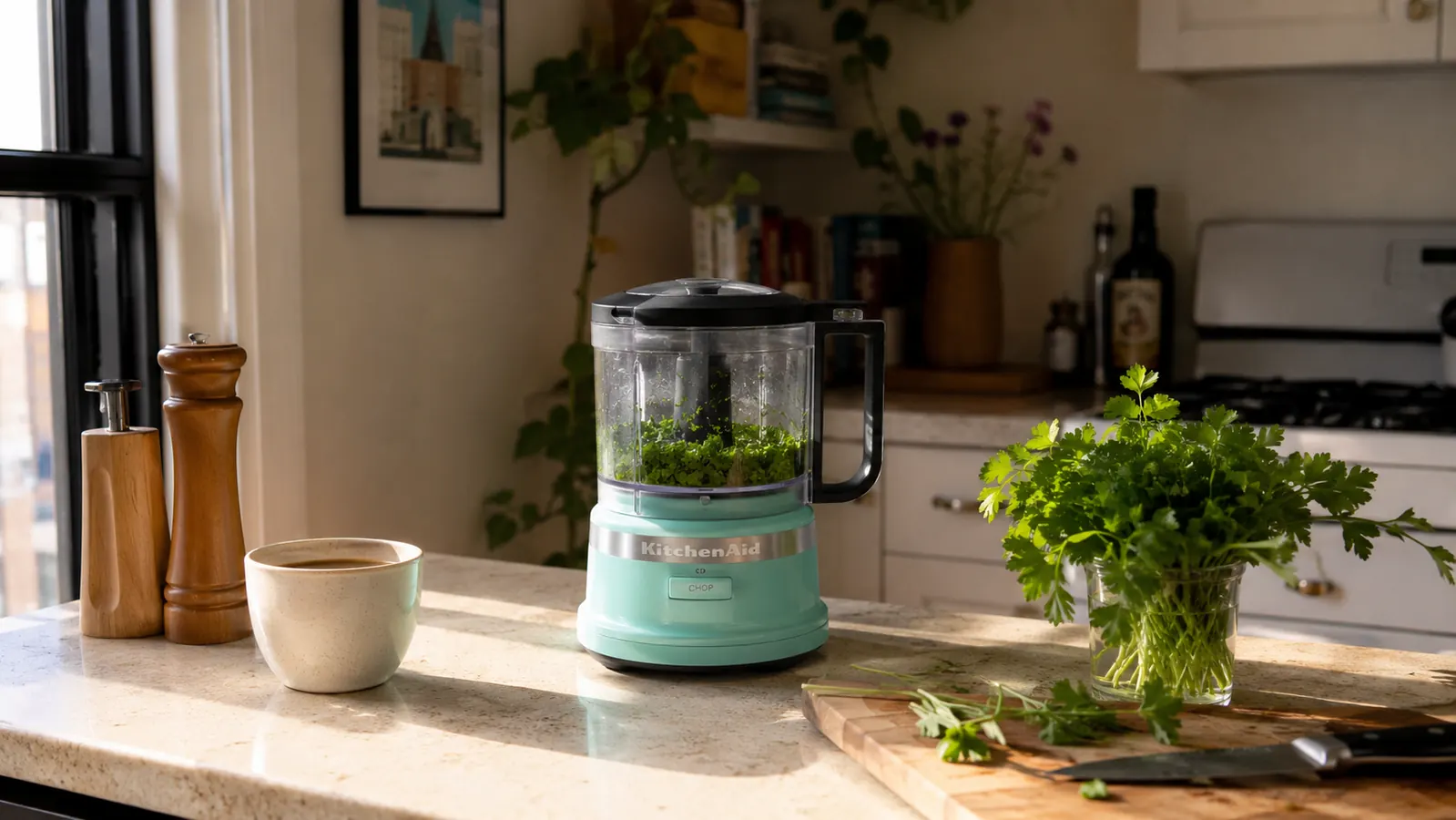
My apartment kitchen has exactly 18 inches of usable counter space between the toaster and the sink. I know because I measured it before I let anything new move in. The KitchenAid 3.5 Cup Food Chopper has been sitting in that 18-inch zone, on the right side next to the backsplash, for the better part of a year. I did not plan to fall this hard for a mini food processor. I bought it because I was tired of spending ten minutes crying over a cutting board every time I needed half an onion, and I assumed it would end up in the closet like every other small appliance I had convinced myself I needed. It did not end up in the closet.
Over months of near-daily use, I have chopped onions for pasta sauce, minced garlic for roasted vegetables, pulsed walnuts for banana bread, blitzed chickpeas for hummus, and shredded a surprising amount of fresh herbs. The KitchenAid food chopper with ASIN B0723B8BJM earned its 18 inches. Here is exactly how, and where it still falls short.
The Quick Verdict
A genuinely useful small-kitchen workhorse that handles everyday chopping fast and cleans up in about 45 seconds, but the 3.5-cup bowl means you are working in batches for anything beyond one or two portions.
Amazon Check Today's Price →Tired of crying over onions every night? This is the fix for a small kitchen.
The KitchenAid 3.5 Cup Food Chopper has over 30,000 reviews for a reason. Check today's price and see the color options on Amazon.
Amazon Check Today's Price on Amazon →How I Have Used It
I live in a 400-square-foot studio in a building where the kitchen got roughly the same floor-plan consideration as the hallway closet. Two burner stove, a half-size fridge, and that 18-inch counter. I cook at home almost every night, mostly simple weeknight food: stir-fry, pasta, grain bowls, the occasional batch of soup. The food chopper has landed in my rotation for probably four out of every five dinners, even when I only need it for 30 seconds to mince two cloves of garlic.
Setup takes about ten seconds. You drop the stainless steel bowl onto the motor base, add your ingredient, drop the blade in, then press the lid down and twist it to lock. The power comes from pressing the lid itself, which I actually appreciate because it means one hand always has to be on the machine. You cannot accidentally leave it running. For chopping, you pulse. For mincing or a finer chop, you hold it down. The whole process for a medium onion, start to finish including cleanup, runs about two minutes.
What surprised me is how quiet this machine is compared to a full-size food processor. I live in an old building with thin walls and I have an upstairs neighbor who apparently has a very rigid sleep schedule. The KitchenAid chopper at 7:30 in the morning has never been a problem. It is loud enough that you know it is working. It is not loud enough to be rude.
The Design Details That Actually Matter
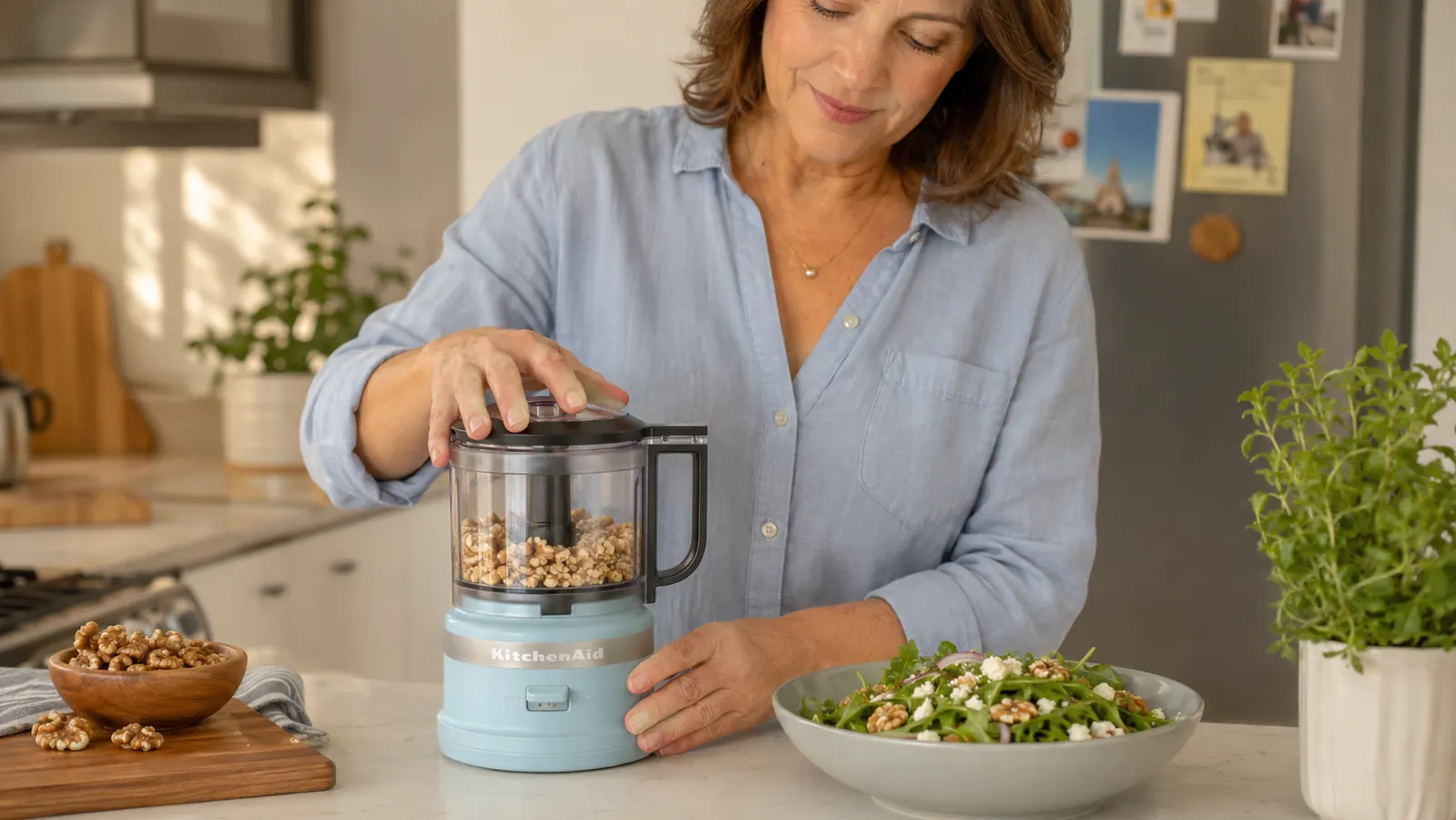
The aqua sky color is genuinely nice looking, and that matters when something lives on your counter permanently. I have seen the white and the empire red versions in other people's kitchens, and those are sharp too, but the aqua stands out just enough to feel intentional without being loud. KitchenAid sells this chopper in about a dozen colors, and every one of them is a real color, not the industrial beige that most kitchen appliances default to.
The bowl is stainless steel, which I prefer over plastic for two reasons. It does not hold onto garlic and onion smells the way a plastic bowl can after repeated use. And it feels appropriately solid for a machine that costs more than a budget mini chopper. The blade is a standard two-pronged stainless chopper blade. KitchenAid does not sell a slicing or shredding disc for this model, which is a real limitation I will come back to. The lid has a safety lock, so the machine literally cannot run unless the lid is engaged, which makes me feel better about the fact that my 8-year-old niece occasionally decides she wants to help with dinner when she visits.
The base is light enough to lift with one hand but has enough rubber on the bottom that it does not slide on my counter during use. The cord wraps around the base for storage, which is a small thing that I noticed right away because my toaster cord is perpetually in a bad mood about this and drapes all over everything.
What It Does Exceptionally Well
Onions and garlic are the obvious wins, but let me give you the specifics. For a medium onion cut into rough quarters, four to six pulses gets me a very consistent medium dice. Eight pulses and I have a fine mince ready for anything where you want it almost invisible, like a meat sauce or a soup base. For garlic, two cloves and three pulses and you have minced garlic. No peeling the smell off your fingers, no sticky cutting board to scrub.
Hummus was the thing that made me stop doubting whether this machine could handle real food. One can of chickpeas, two tablespoons of tahini, lemon juice, a garlic clove, a splash of olive oil. About 90 seconds of processing and I had something that tasted better than anything from the refrigerated section.
Nuts are another consistent strength. I make a banana bread every couple of weeks and I use chopped walnuts. Previously I was doing them in a zip-lock bag with a heavy mug, which is effective but annoying. Now it is a five-second job. Same with fresh herbs. A small handful of parsley or cilantro, a few pulses, done. The herbs do not get bruised the way they can with a knife if your knife skills are, like mine, merely adequate.
Hummus was the thing that made me stop doubting whether this machine could handle real food. One can of chickpeas, two tablespoons of tahini, lemon juice, a garlic clove, a splash of olive oil. About 90 seconds of processing, scraping down the sides once partway through, and I had something that tasted better than anything from the refrigerated section. The bowl is just large enough for a single can of chickpeas with the other ingredients, which is exactly the right amount for one person to eat before it gets weird in the fridge.
Where It Runs Into Limits
The 3.5-cup bowl is genuinely small. This is not a complaint about the product, it is a fact about the format. If you are cooking for more than two people, or if you want to chop a full head of cauliflower for a roasted sheet pan, you will be doing it in batches. I made a big pot of vegetable soup last fall and chopped three different vegetables in succession. That is fine and it cleaned up quickly between rounds, but it is worth knowing before you buy it expecting the speed of a full-size food processor.
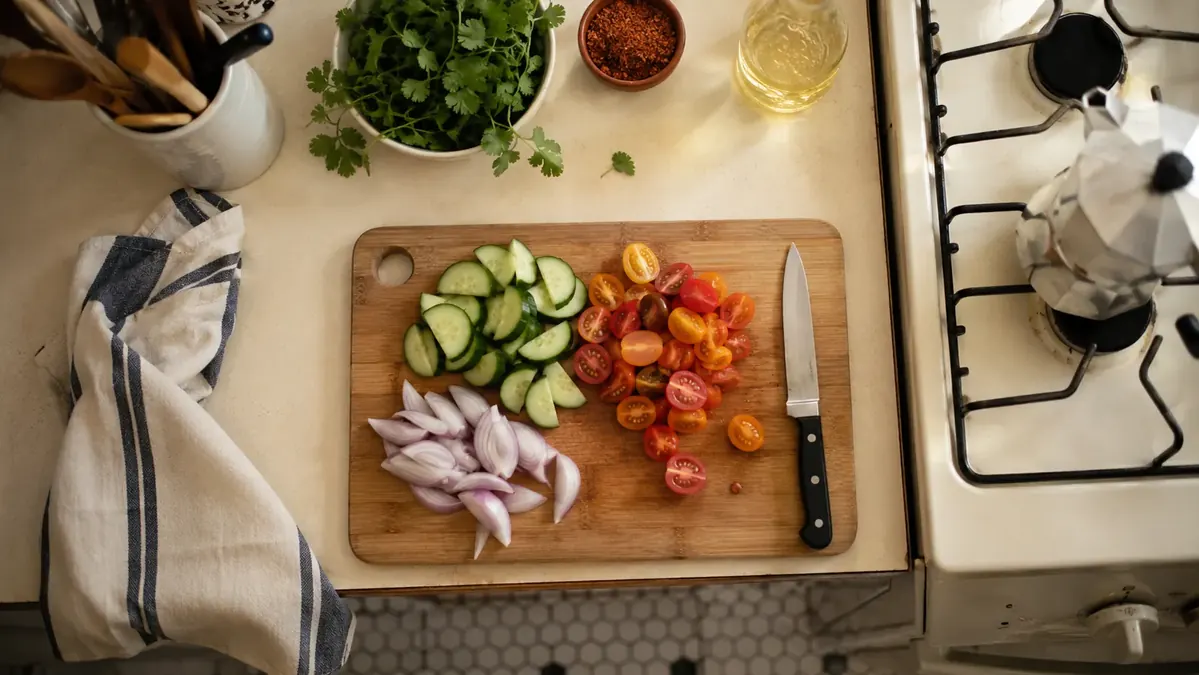
It is also only a chopper. There is no shredding disc, no slicing disc, no dough blade. If you want to shred a block of cheese or slice cucumbers, a full-size food processor with attachments is the right machine. This one does one thing: it chops. It does that one thing very well. But do not buy it hoping it will cover everything a food processor would.
Wet ingredients need some care. Salsa, for example, can get watery fast if you over-process it. I learned this the first time I tried to make fresh pico de gallo and wound up with a bowl of tomato water with bits in it. The trick is to pulse briefly, check the texture, and stop well before you think you are done. This is true of most food choppers, not just this one, but it is a learning curve worth mentioning.
The lid can feel a little fiddly when you first try to lock it. There is a specific angle you have to hit to get the blade to engage. Once you have done it twenty or thirty times it becomes second nature, but in the first week I stood there for an embarrassing amount of time trying to figure out why the machine was not starting. The answer was always that the lid was not quite seated.
How the Price Stacks Up
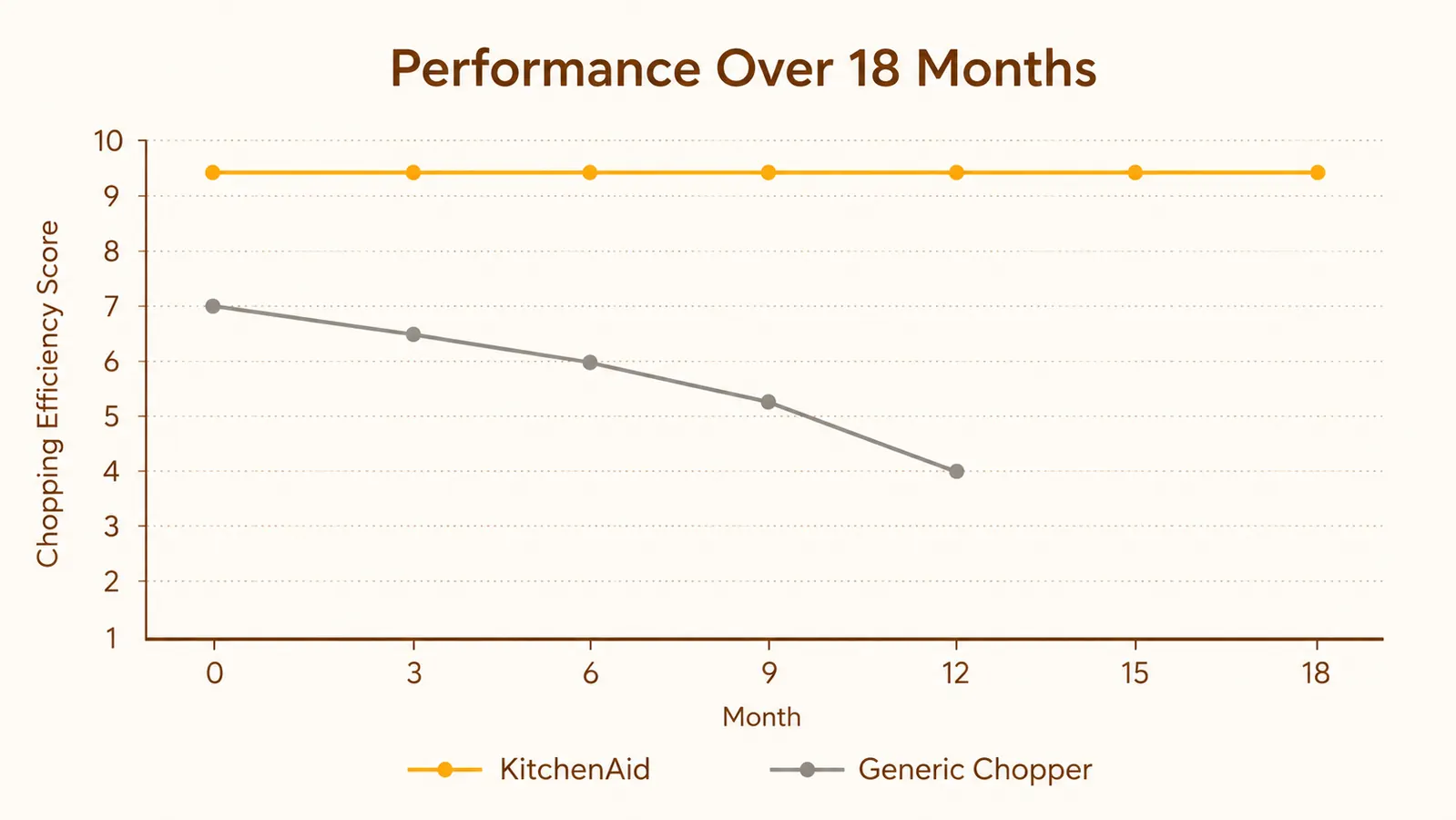
At current price you are paying noticeably more than a generic mini food chopper from a no-name brand, and you are paying more than the Cuisinart Mini-Prep, which is the most common alternative. I have used the Cuisinart Mini-Prep at a friend's apartment. It does the job. The KitchenAid wins on two things for me: the stainless steel bowl instead of plastic, and the build quality that makes it feel like it will last more than two years of regular use. If you want a detailed side-by-side, I wrote one here: KitchenAid Food Chopper vs Cuisinart Mini-Prep.
KitchenAid backs this with a one-year warranty. In my case that has not come up because nothing has broken. The motor is the only real failure point on a machine this simple, and mine has not given me any sign of trouble after many months of regular use. If you want to see whether the counter space investment is worth it beyond just the chopping, I also pulled together the 10 reasons this chopper earns its counter spot in a small kitchen.
What I Liked
- Stainless steel bowl resists odors and feels more durable than plastic
- Compact footprint fits easily in tight kitchens with limited counter or storage space
- Genuine quiet operation, manageable in apartment buildings with thin walls
- Fast cleanup: bowl, blade, and lid are all dishwasher safe
- Available in over a dozen colors, so it looks good sitting out permanently
- Lid safety lock prevents accidental starts and is reassuring around kids
- Handles soft to medium-firm ingredients extremely well: onions, garlic, herbs, nuts, chickpeas
Where It Falls Short
- 3.5-cup bowl means batching for larger quantities, not ideal for families or batch cooking
- No slicing or shredding disc attachments, strictly a chopper
- Lid can take a few uses to figure out the correct locking angle
- Wet ingredients like fresh tomatoes require restraint or they turn to liquid fast
- Higher price than most competing mini choppers in the same capacity range

Who This Is For
This is the right machine if you cook mostly for one or two people, you want something that genuinely speeds up prep without taking over your counter, and you care about the machine lasting more than a year. It is a strong fit for apartment and condo kitchens where the counter budget is tight. It is also a good pick if you make hummus, dips, salad dressings, or other small-batch blended foods with any regularity. The stainless bowl makes it a bit better for anyone who finds that plastic bowls in cheap choppers start smelling like garlic within a month.
It is also a reasonable upgrade for someone who currently does all their prep by hand and wants to spend less time at the cutting board without buying a full-size food processor that would take over half their kitchen. My counter is 18 inches wide. This machine takes up maybe 5 of them. That math works in my favor every single day.
Who Should Skip It
If you regularly cook for four or more people, the 3.5-cup bowl will frustrate you. You will constantly be working in batches, which defeats a lot of the time-saving point. In that case, a full-size food processor with a larger bowl is a smarter buy, even if it takes more counter space. If you also need to shred cheese or slice vegetables, this machine cannot help you with that at all. And if price is the primary factor, there are mini choppers that do a passable job for less money. The KitchenAid wins on durability and experience, but it is not the budget option.
If you cook for one or two and want the chopping done in seconds, this is your machine.
The KitchenAid 3.5 Cup Food Chopper comes in 12+ colors and has over 30,000 reviews behind it. Check today's price on Amazon and find your color.
Amazon Check Today's Price on Amazon →