
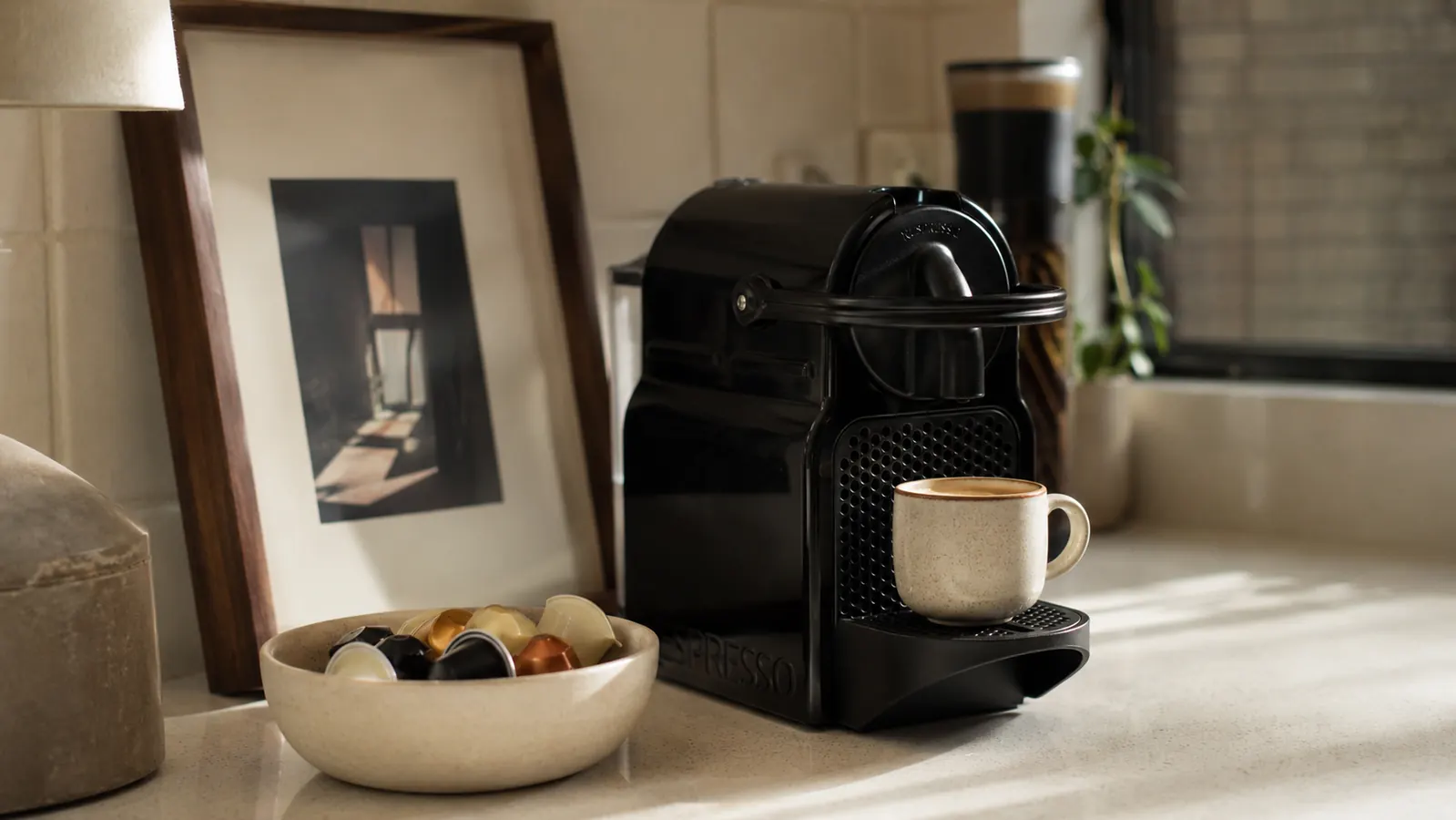
My studio apartment has 14 inches of usable counter space next to the sink. That is not an exaggeration. When I moved in three years ago I got rid of a bulky drip coffeemaker that was taking up half of it, and I spent the next eight months either making do with instant coffee or walking six blocks to the nearest cafe every morning. I knew that was not sustainable, especially in January. So last December I ordered the Nespresso Inissia, slid it into that 14-inch gap, and started pulling shots. Six months later it is still there, and I still reach for it before anything else in the morning.
This review covers real daily use across six months: what the Inissia does well, where it genuinely falls short, how the capsule costs add up, and whether it belongs in your small kitchen. The short answer is yes for most apartment coffee drinkers, but there are a few specific situations where I would tell you to look elsewhere first.
The Quick Verdict
The Nespresso Inissia delivers genuinely good espresso in the smallest footprint of any machine in its class. The capsule costs and lack of a built-in milk frother are real drawbacks for some buyers, but if counter space is your hard constraint, nothing else compares at this price.
Amazon Check Today's Price →Six months, zero regrets. Check whether the Inissia fits your counter.
The Inissia takes up less counter space than a stack of paperbacks. If espresso in the morning matters to you and your kitchen is tight, this is the machine to look at first.
Amazon Check Today's Price on Amazon →How I've Used the Inissia
I live in a 380-square-foot studio in Chicago. My kitchen is a galley layout: two counters roughly 24 inches deep, a half-size refrigerator, and a two-burner induction cooktop. Every appliance earns its place or it goes. The Inissia has been on the counter every single day since December 8th. I use it for one or two shots every morning, occasionally a ristretto in the afternoon, and sometimes a lungo when I am working from home and need something to sip through a meeting.
I tested it with Original Line capsules from Nespresso directly (Ispirazione Ristretto Italiano, Livanto, and Melozio are the three I keep stocked), plus a few third-party capsules from Cafe Bustelo and a house brand from a local roaster. I tracked shot quality, extraction time, temperature after a cold morning, and any maintenance issues I ran into. The 24-ounce water tank sounds small, but for a one-person household it means refilling roughly every three days, which I find a reasonable tradeoff for the tank being removable and easy to carry to the sink.
I also timed the heat-up: 25 seconds from cold start to ready light. That matters on weekday mornings. I compared that against a friend's Keurig K-Mini and a colleague's Breville Bambino Plus. The Keurig brews faster but makes drip coffee, not espresso. The Bambino makes genuinely better espresso but takes up three times the counter footprint and costs four times as much. The Inissia occupies a very specific and useful middle ground.
Size and Footprint: The Real Selling Point
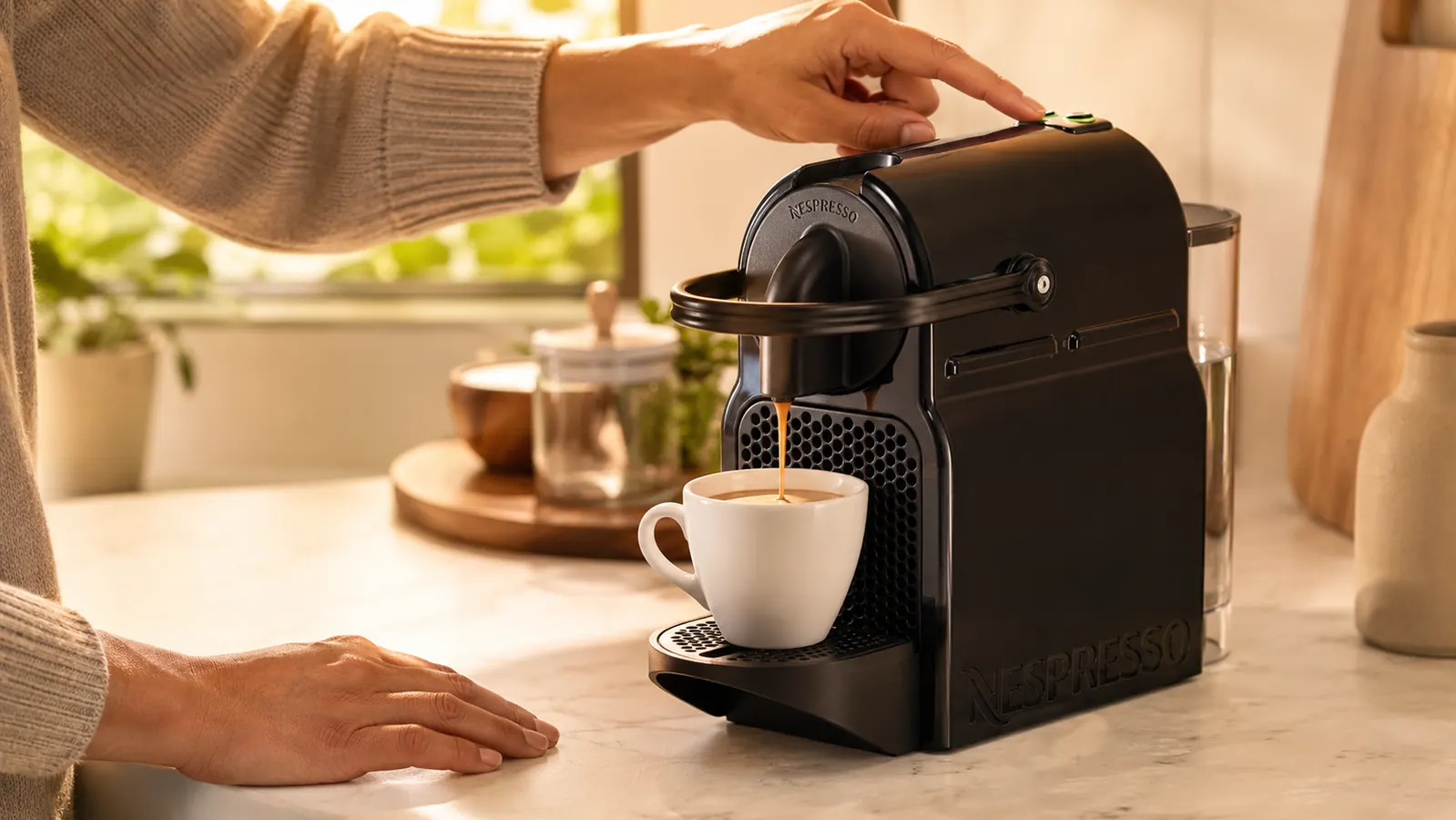
The Inissia measures 4.7 inches wide, 12.8 inches deep, and 8.7 inches tall. Those are not just marketing numbers. I measured the space on my counter before I ordered and the machine fits with room to spare. The water tank pulls from the back rather than the side, so you can push it close to a wall or a cabinet without losing access to it. That rear-loading tank design is genuinely thoughtful for tight spaces and it is one of the main reasons I picked the Inissia over the Essenza Mini, which has a side-loading tank that needs a few extra inches of clearance.
The drip tray is smaller than I expected. It holds maybe two shot's worth of drips before it needs emptying. In six months I have overflowed it exactly once, on a Sunday morning when I forgot to check it before making two shots back to back. That is genuinely a minor inconvenience and not a dealbreaker, but I want to mention it because it is the kind of thing you do not notice in product photos.
Shot Quality Over Six Months
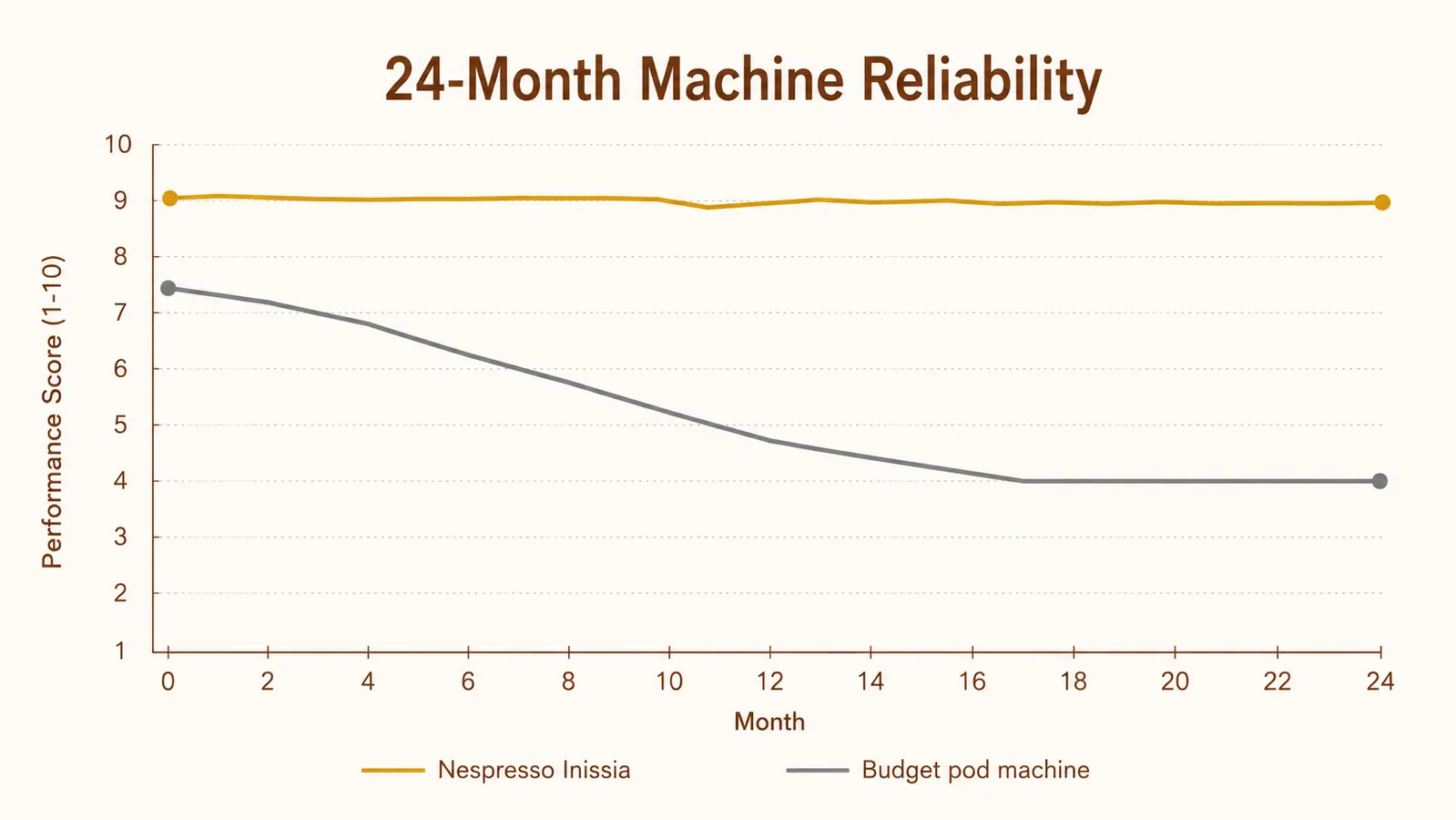
Espresso from the Inissia is good. Not great in the way a premium machine is great, but consistently good in the way that makes you stop missing the coffee shop within about two weeks. The machine runs at 19 bars of pressure, which is above the 9 bars needed for proper espresso extraction, and the crema on a fresh Nespresso capsule is genuine and holds for about 45 seconds. I have had exactly two shots in six months that I would call weak or hollow, and both were from third-party capsules rather than Nespresso's own line.
Temperature is where I noticed the most variation. On cold Chicago mornings (we are talking 15 degrees outside, drafty old building), the first shot out of the machine on a cold start runs slightly cooler than ideal. I learned to run a blank cycle without a capsule first, just to warm the group head, and that fixed the issue entirely. It adds 30 seconds to my morning routine, which I can live with. If your apartment keeps warmer overnight, you may never notice this at all.
Within two weeks of buying the Inissia I stopped walking to the coffee shop in the morning. The shot is that consistently good.
The lungo button is worth using. It pushes roughly 3.7 ounces of water through the capsule rather than the standard 1.35-ounce espresso shot. It is not a true lungo in the classical sense, it is more of a stretched shot, but with the right capsule (Nespresso's Melozio works well here) it makes a 4-ounce coffee that is genuinely satisfying on mornings when I want something to sip rather than slam.
The Capsule Cost Question
I want to be straight with you about capsule costs because this is the most common thing people gloss over in Nespresso reviews. Nespresso's Original Line capsules run in the mid-range per pod depending on where you buy them and which variety. If you drink two shots a day, you are looking at a moderate monthly capsule spend. That is less than a coffee shop habit but it is not nothing, and it is more than ground coffee from a burr grinder setup would cost.
Third-party capsules bring that cost down. I have used Cafe Bustelo's Nespresso-compatible capsules, which run at a lower price point, and they are solid if not quite as consistent as the Nespresso branded pods. Crema is thinner and shot-to-shot variation is higher, but for afternoon coffee rather than a precision morning ritual they are fine. The machine itself does not care what brand of capsule you use as long as it is Original Line format.
The used capsule container holds about 11 pods. I empty it every five or six days. The auto-eject mechanism works cleanly every time; I have not had a stuck capsule in six months of daily use.
What the Inissia Does Not Do
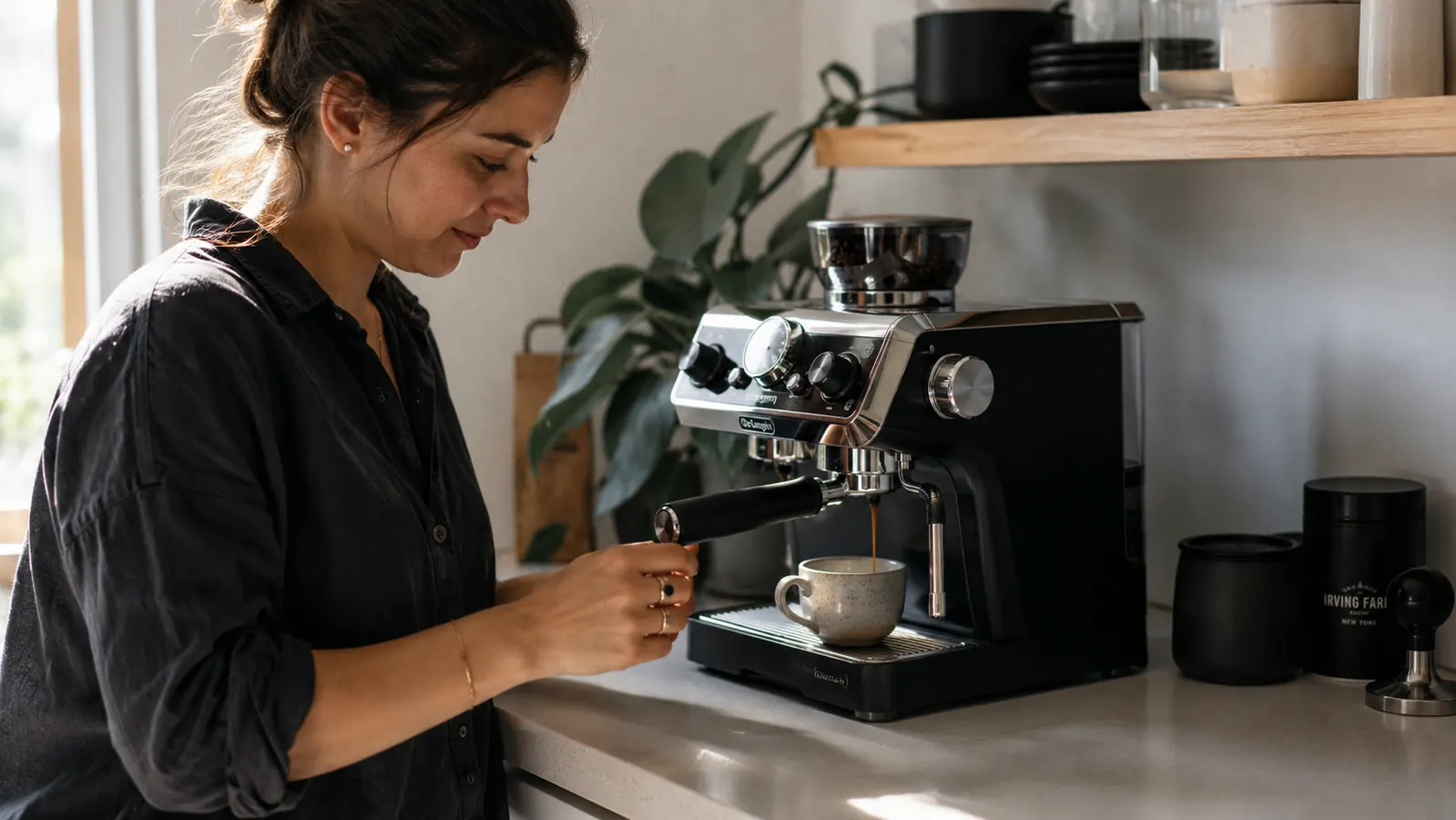
No built-in milk frother. That is the main gap. If you want lattes or cappuccinos, you need a separate handheld frother or a steam wand. I picked up a budget battery-powered milk frother from Amazon (the Aeroccino is the official Nespresso one, which runs much higher) and it does the job well enough for a morning latte. But it is an extra piece of equipment to store, which matters in a small kitchen.
Only two volume options: espresso (1.35 oz) and lungo (3.7 oz). There is no Americano mode, no programmable custom volume, and no temperature control. If you are someone who wants to dial in extraction parameters, this is not your machine. The Inissia is designed to be simple and repeatable, not adjustable. After six months I consider that a feature rather than a flaw, but I recognize it will frustrate a certain type of coffee person.
The water tank also does not have a window or level indicator visible from the front. You have to pull it out or look down from above to check the level. I filled it blind twice and found I had not seated it properly, which caused a small leak onto the counter. Not a big deal, but a design quirk worth knowing about.
What I Liked
- Smallest footprint of any Nespresso machine: 4.7 inches wide fits almost any counter gap
- 25-second heat-up from cold start means no waiting on weekday mornings
- Consistent 19-bar pressure produces genuine crema on fresh capsules
- Rear-loading water tank lets you push the machine against a wall
- Auto-eject used capsule mechanism works cleanly every time
- Simple two-button interface means there is genuinely nothing to learn
- Quiet compared to most espresso machines: loud for about 30 seconds, then done
Where It Falls Short
- No built-in milk frother: lattes require a separate handheld frother
- Capsule costs add up: 70-85 cents per shot for branded pods
- Drip tray is small and needs emptying frequently if you brew multiple shots
- No water level window: you have to remove the tank to check fill level
- First shot on cold mornings runs slightly cool without a blank warm-up cycle
- Only two volume presets: no programmable options or temperature control
- Capsule-only format locks you into proprietary pods forever
Maintenance After Six Months
The Inissia is the easiest appliance I own to clean. The drip tray and capsule container both pull out without tools and rinse under the faucet. There is no portafilter to scrub, no steam wand to flush, no group head gasket to replace. The machine prompts you to descale after a certain number of shots (a descaling light comes on). I have descaled it once in six months using Nespresso's descaling kit, which takes about 20 minutes and involves running the machine through a two-stage cleaning cycle. The process is clearly documented in the manual and on Nespresso's website. I have not had any performance issues related to scale buildup.
Who This Is For
The Inissia is right for you if your kitchen is small and your mornings are busy, and you want espresso rather than drip coffee. It is also the right pick if you are new to espresso machines and do not want to learn anything technical. The machine is genuinely foolproof: drop in a capsule, press a button, wait 25 seconds, get espresso. After six months I can tell you that simplicity does not get old. It also holds up well if you rent and move often, because a machine that weighs 4.4 pounds and takes up 14 inches of counter depth is easy to pack.
Who Should Skip It
If you drink lattes or cappuccinos every morning, budget a handheld frother into your purchase or look at the Nespresso Essenza Mini bundle that includes an Aeroccino. If you want to control your grind, temperature, and extraction variables, this is not your machine; a Breville Bambino or a manual setup will serve you better even if it takes more counter space. And if the per-capsule cost bothers you on principle, consider whether a good pour-over kettle and a small hand grinder might be a better long-term fit. I am not arguing against the Inissia, I am just being honest that the locked-in capsule format is a real choice with real ongoing cost.
If a tight counter and fast espresso are what you need, the Inissia delivers both.
Six months of daily shots in a studio apartment with 14 inches of counter space. It still earns its spot every morning. Check today's price to see if it fits your budget.
Amazon Check Today's Price on Amazon →