
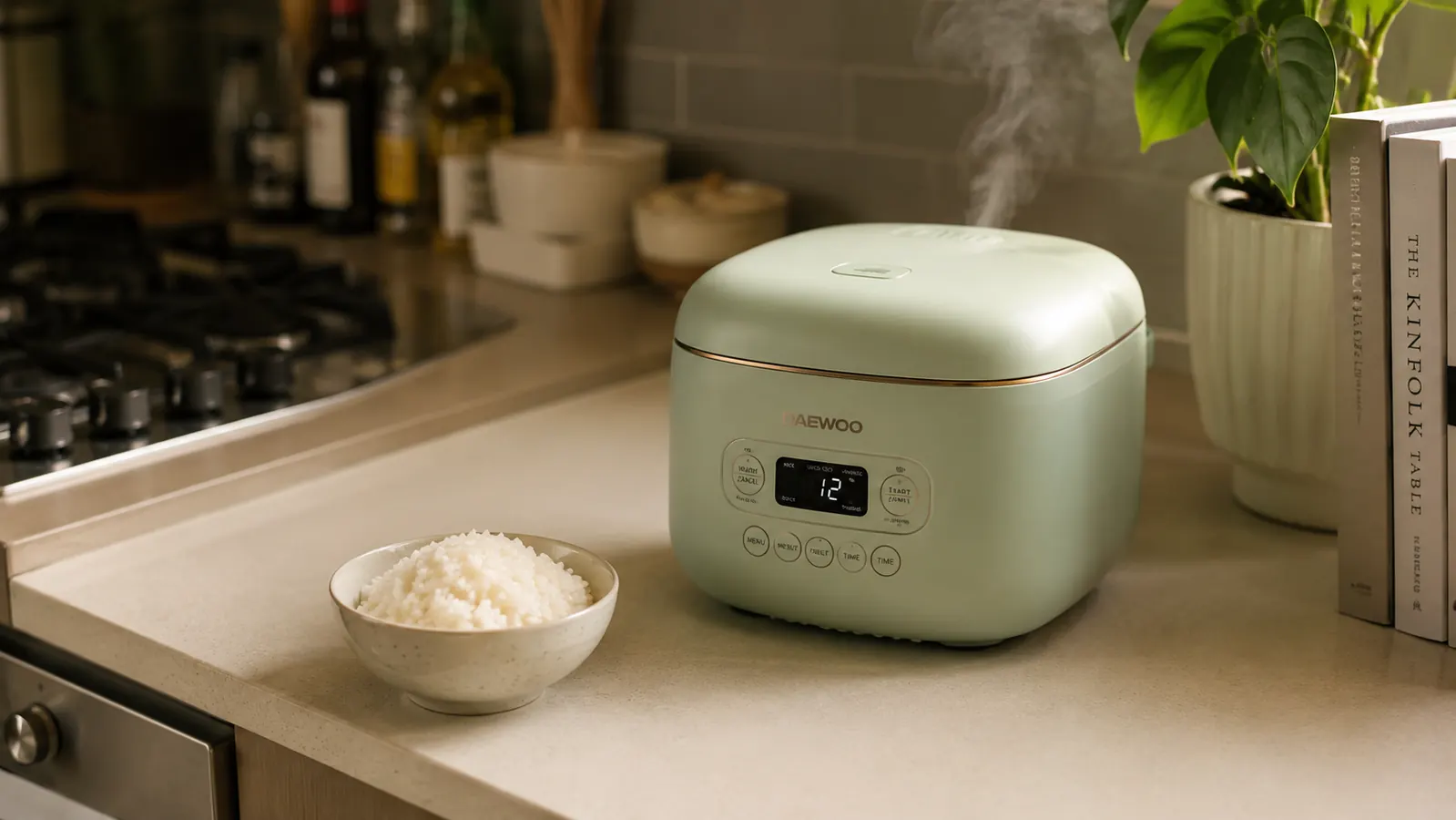
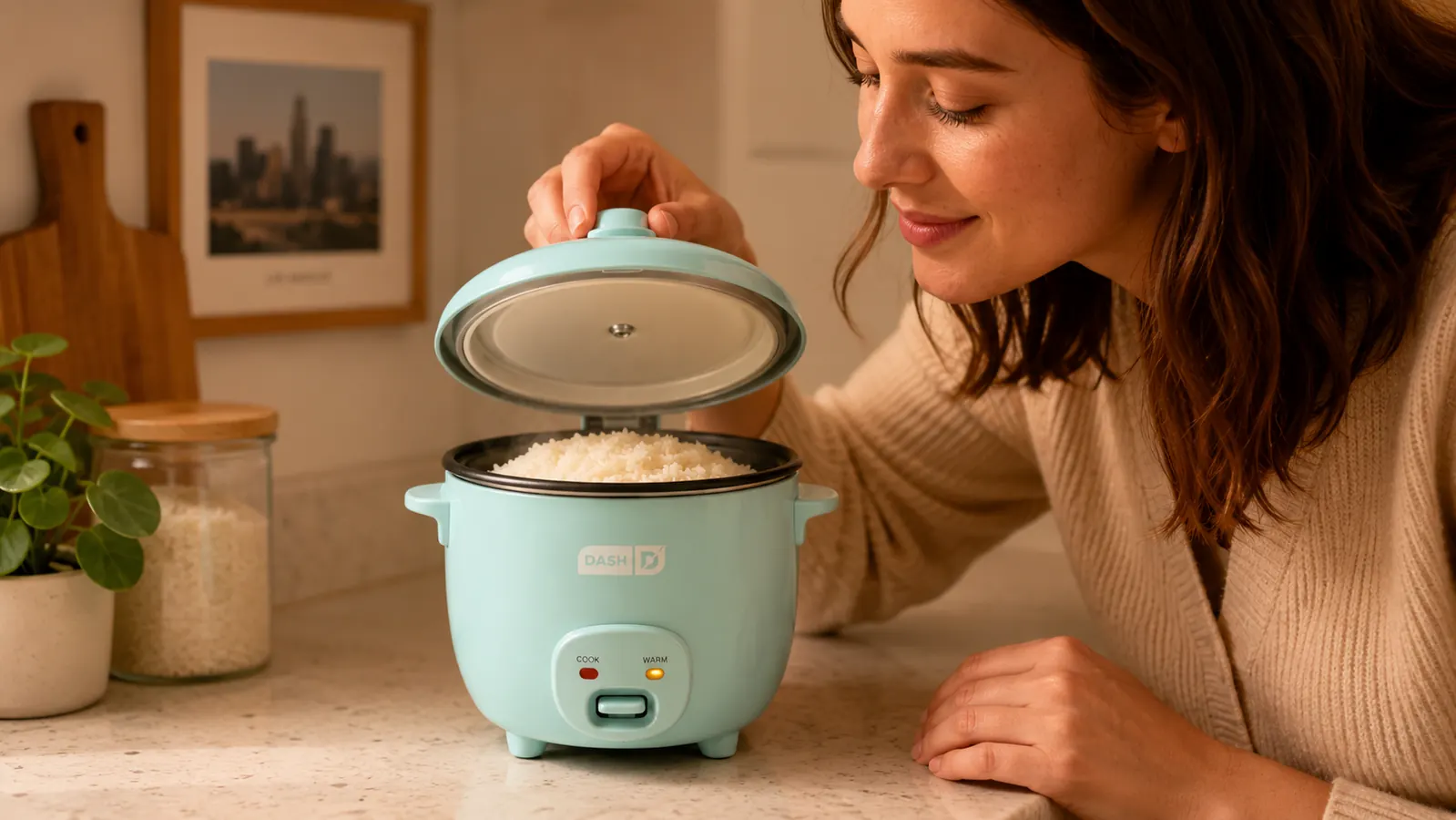
I want to tell you something the listing will not say: the Dash Mini Ceramic Rice Cooker does not look like much in the box. It is small, it is light, and when you first pick it up you might think you made a mistake. The plastic feels thinner than you expect from an appliance. The cord is short. The included measuring cup is smaller than the ones in your drawer. And then you plug it in, add rice and water, press the one button it has, and twenty minutes later you have a perfect cup of fluffy rice without doing a single other thing. That is the whole point of this machine, and that is what 47,000 reviewers keep trying to say.
This is my honest take on the Dash Mini after owning one for a while in a one-bedroom apartment in Portland, cooking mostly for myself. I want to cover the things the listing skips over, the real capacity picture, what the steam vent actually does to your cabinet shelf, how the keep-warm cycle works when you forget about it, and why two specific groups of people should not buy this. You deserve the full picture before you spend your money.
The Quick Verdict
A genuinely useful single-serve rice cooker that earns its spot on the counter for solo cooks and small households, with a few honest limitations worth knowing upfront.
Amazon Check Today's Price →Tired of gummy stovetop rice and wasted leftovers? This tiny cooker fixes both.
The Dash Mini Ceramic Rice Cooker is one of the most-reviewed compact cookers on Amazon for a reason. Check current pricing and availability before you plan your next grocery run.
Amazon Check Today's Price on Amazon →What I Actually Used It For (And What I Tested on Purpose)
I am not a rice snob. I grew up eating boxed rice pilaf from the stove and thought that was normal. What pushed me toward a dedicated rice cooker was a specific problem: every time I tried to cook a small amount of rice on my electric stovetop, I would burn the bottom or undercook the center because the burner on this apartment stove either runs hot or does not hold a simmer reliably. I wanted something that took the guesswork out of a one-person portion. The Dash Mini costs less than a bag of good jasmine rice, so the risk felt low.
Over the time I have owned it, I have cooked white rice, jasmine rice, basmati, brown rice, quinoa, and steel-cut oats in it. I have used it to steam broccoli florets by putting them in the pot with just a little water. I tried farro once and it worked but needed longer than the cooker auto-cycles, so I pressed the button twice. I also deliberately left rice in the keep-warm mode for four hours to see what happened. None of these were scientific tests, but they are the kind of things you will actually do with this machine.
The Capacity Reality Nobody Talks About Clearly
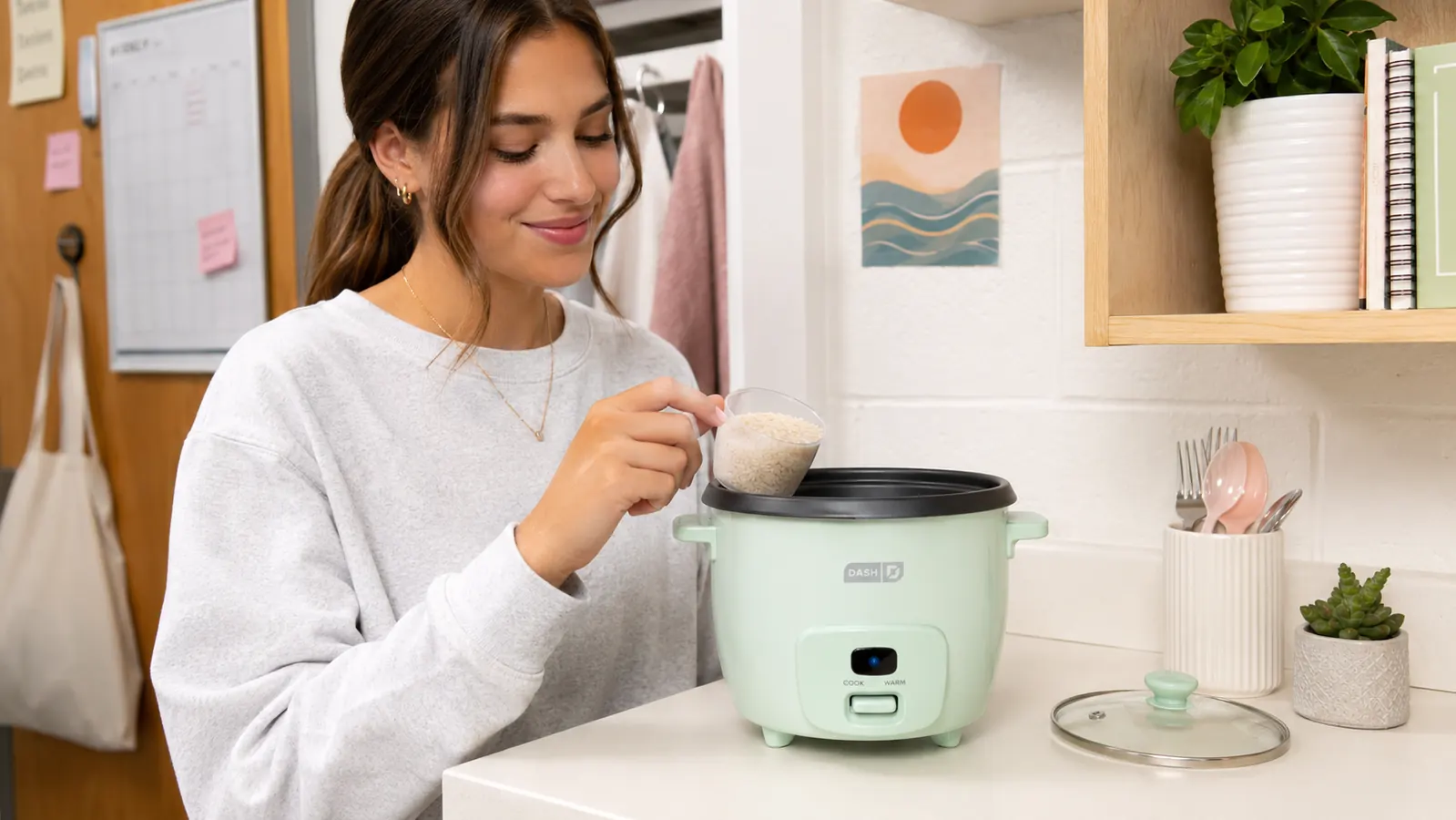
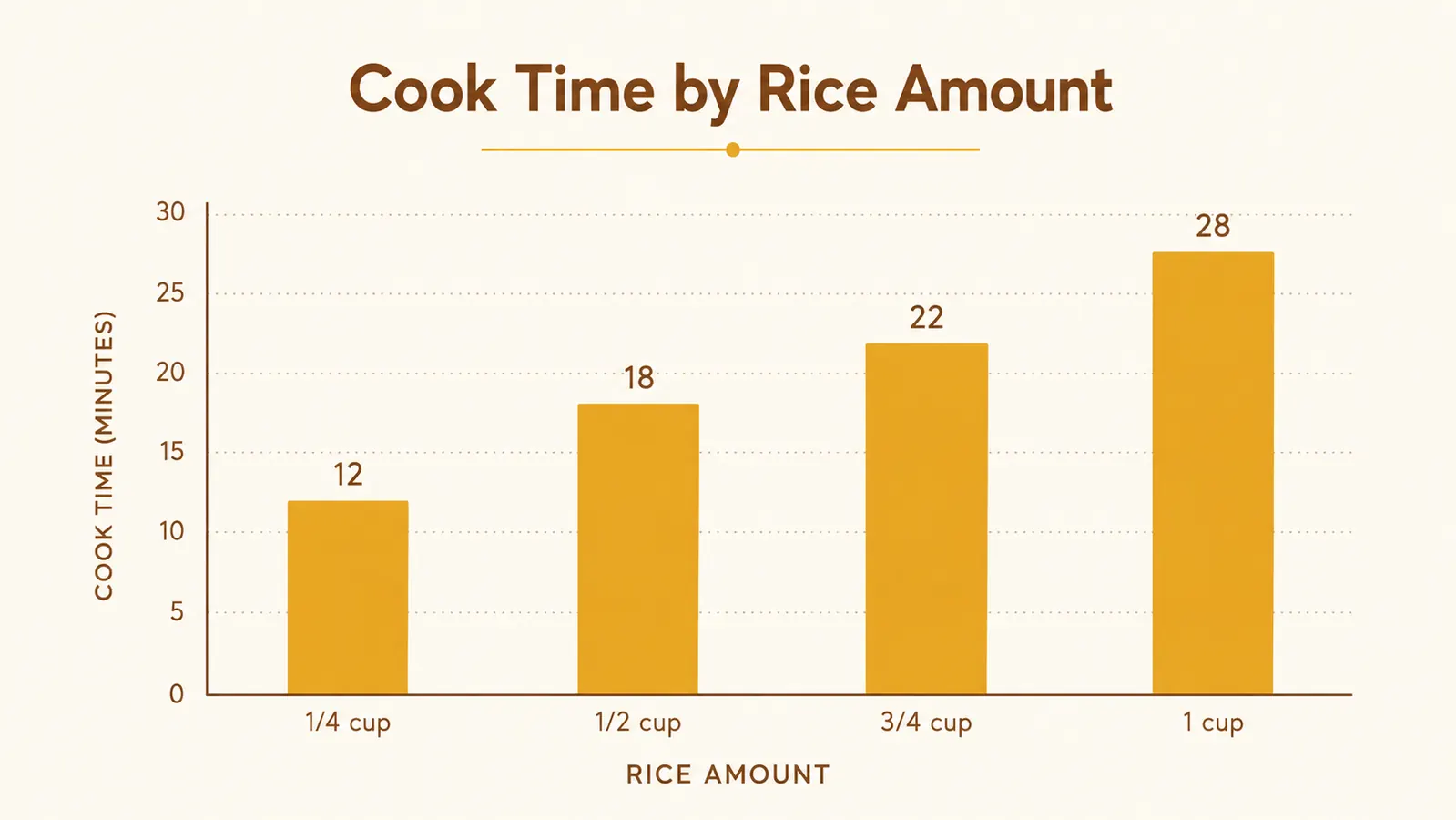
The Dash Mini is described as a 2-cup rice cooker. That sounds straightforward until you realize rice cookers measure capacity in cooked cups, not dry cups. The included measuring cup is smaller than a standard US cup measure. One full scoop of that included measuring cup is roughly 3/4 of a US dry cup of rice. When you cook it, you end up with about one and a half to two cups of cooked rice, which is a solid serving for one adult or a small side dish for two.
This matters because people shopping for a rice cooker for two people sometimes buy the Dash Mini expecting to cook enough for both of them as a main-dish portion. You can stretch it to two modest servings, but if you want rice as a main component of a full meal for two, you will run two cycles back to back, which takes forty minutes total. That is fine if you plan for it and not fine if you forgot to start it in time. If you cook for two consistently and rice is a regular main, size up to a 3 or 5-cup cooker. This one is designed for one.
The Steam Vent: A Real Thing You Should Know About
The Dash Mini has a small hole in the lid where steam escapes during the cooking cycle. This is completely normal and by design. What the listing photo does not convey is that this steam vent vents actively. If you store this machine under a cabinet shelf, the steam will hit the underside of that shelf during every cook cycle. Over time, if that shelf is wood or laminate, the repeated moisture exposure can warp or discolor it. I had mine under a shelf for the first two weeks before I noticed the moisture collecting on the shelf surface above it.
The fix is simple: move it out from under the cabinet when cooking, or place a folded dish towel on the shelf above it as a moisture barrier. I moved mine to an open section of counter with nothing overhead and the problem went away entirely. But this is the kind of practical detail that affects where you can actually put the machine, and it is not mentioned anywhere on the listing. If your kitchen has limited open counter space without overhead cabinets, think about where you will park this before you buy.
The One Button Situation Is Both Good and Annoying
There is exactly one button on this machine. You press it, the cooker starts, and when the rice is done it clicks over to keep-warm mode automatically. That is the entire interface. No timer, no delay start, no brown rice setting, no steam function button. Just cook and keep-warm.
For most solo cooks, this is genuinely good. Fewer settings means fewer ways to mess it up, and the auto-switch to keep-warm means you do not have to hover over it. But the single-button setup creates two specific frustrations. First, there is no way to set a cook time or delay the start, so if you want rice ready at 6:30 PM you have to remember to start it at 6:10 PM. No workaround for that. Second, the keep-warm mode runs indefinitely until you unplug the machine. After about two hours on keep-warm, the rice starts to dry out around the edges. After four hours, the rice on the bottom develops a thin crust. It does not burn, but it is drier than you would want. If you forget about it for most of a workday, you will come home to rice you probably would not serve a guest.
The one-button design is not a limitation for the cook who just wants rice without thinking. It only becomes a frustration when you expect it to behave like a more expensive machine it was never meant to be.
Brown Rice and Other Grains: Honest Results
Brown rice works in the Dash Mini, but it requires a workaround. Brown rice needs more water and more time than white rice. The machine will click over to keep-warm before the brown rice is fully cooked if you follow the standard water ratio. The trick that actually works: use a 1-to-2 ratio of rice to water instead of the standard 1-to-1.5, and when the machine clicks to keep-warm, press the cook button a second time to run another partial cycle. The second cycle is usually shorter since the water is already hot. It takes practice to get right and is not as hands-off as white rice.
Quinoa is where this machine genuinely surprised me. One scoop of dry quinoa with the matching amount of water produces fluffy, well-cooked quinoa in about 15 minutes. The ceramic pot does not stick the way a stovetop pot does with quinoa, and cleanup is fast. Steel-cut oats work similarly, though they need a bit more water and sometimes a second press. If you eat grains regularly for breakfast and hate cleaning a saucepan every morning, this machine covers that use case well.
The Ceramic Pot and Cleanup: Genuinely Good
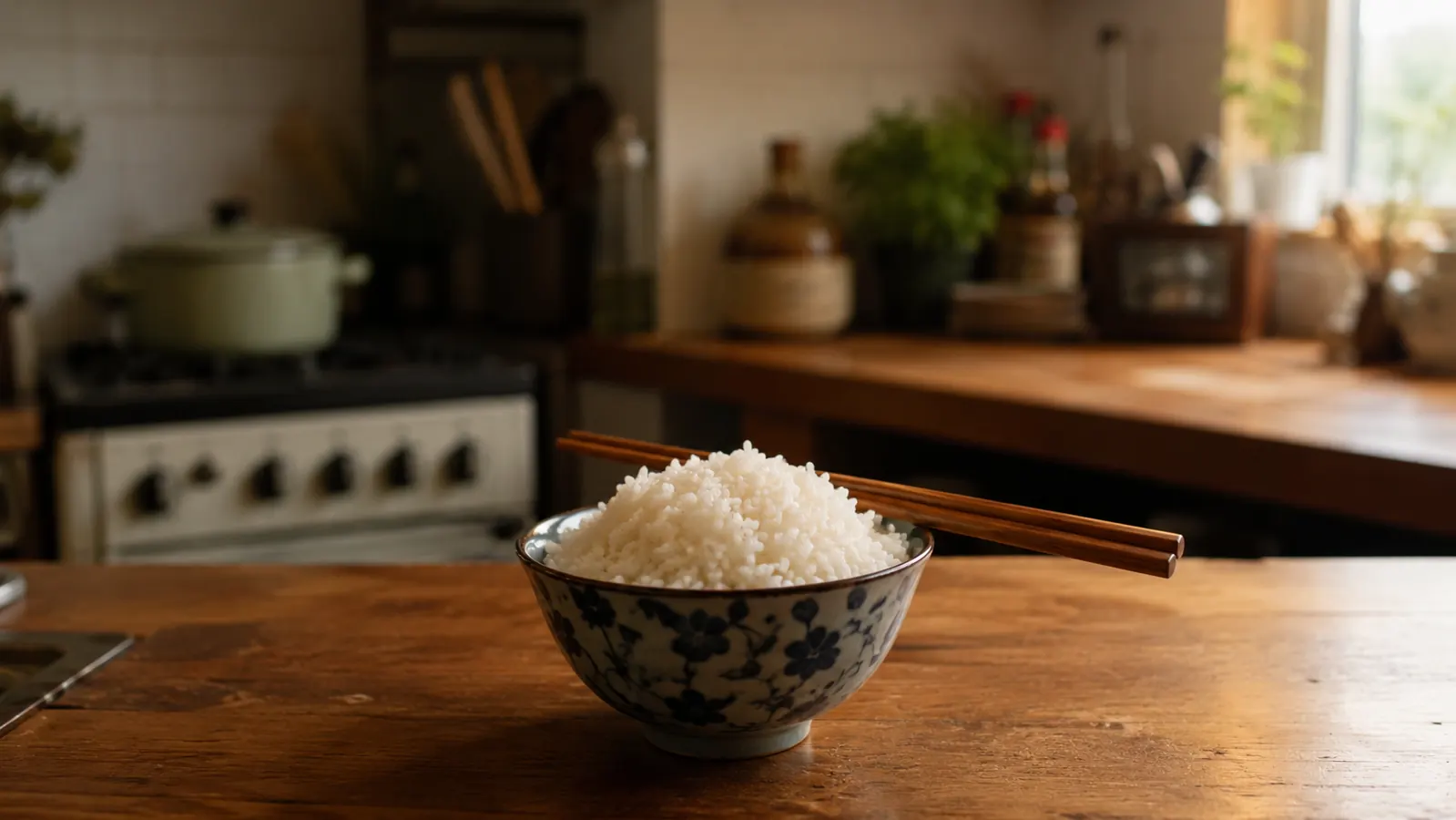
The inner pot on the Dash Mini has a ceramic nonstick coating, and it performs noticeably better than the bare aluminum pots that come with many cheap rice cookers in this price range. Rice lifts cleanly off the sides with a spatula. After the first rinse, the pot is clean with no scrubbing. I have run the pot under hot water and wiped it out every single time I used it, no soap needed, and it stays clean. The ceramic does not scratch from a rice paddle or wooden spoon.
The lid is plastic with a silicone seal around the edge. It wipes clean easily but needs to be taken off and dried separately after each use or a small amount of condensation pools in the seal groove and can smell faintly sour if left sitting. This takes about ten seconds to address and is not a real complaint, just something to make a habit. The exterior of the machine is a simple plastic shell in a choice of colors. Dash offers it in aqua, red, white, and a few others. The color goes all the way around the outside and holds up fine without chipping or yellowing in normal use.
What I Liked
- White rice and jasmine rice come out perfectly fluffy with no monitoring required, every single time
- Ceramic inner pot is genuinely nonstick and cleans with a quick rinse and wipe
- Compact enough to store in a cabinet or live on the counter without claiming significant space
- Excellent for quinoa and steel-cut oats, not just rice, making it useful for everyday grain cooking
- Price point makes it a zero-risk purchase, easy to try without committing to an expensive appliance
- Auto-switches to keep-warm when done so you are not racing to unplug it the moment the cycle ends
Where It Falls Short
- Actual single-serving capacity is smaller than the 2-cup label implies, will not feed two people as a main dish portion
- Steam vent vents upward actively, cannot be stored under a closed cabinet shelf without moisture damage risk over time
- No settings or timer means no delay start and no way to adjust cook time for brown rice without pressing the button twice
- Keep-warm mode will dry out rice if left more than about two hours, rice bottom gets stiff after four or more hours
- Brown rice requires a workaround (extra water plus a second cook cycle) and is less hands-off than white rice
- Short power cord may require placement near an outlet, an extension cord may be needed in some kitchen layouts
Who This Is For
The Dash Mini is an excellent fit for a single person who eats rice or grains regularly and currently cooks them on the stovetop with inconsistent results. It is also ideal for a dorm room, an RV kitchen, or an office with a break-room counter and a small fridge, anywhere you want the option to cook a grain side dish without a full stovetop setup. If you are a parent who wants a separate dedicated appliance so the kids can make their own rice safely without using the stove, this works well for that too. The single button, ceramic pot, and auto keep-warm make it nearly impossible to use wrong.
Who Should Skip It
Two groups should look elsewhere. First, couples or small families where rice is a staple side dish at most meals. The capacity is genuinely too small for two full servings as a main, and running two cycles every night will get old quickly. Look at a 3-cup or 5-cup rice cooker from Aroma or Zojirushi at that household size. Second, anyone who primarily eats brown rice or whole grains and wants a truly hands-off experience. Brown rice in the Dash Mini requires extra water and a second press of the button, which works but is not the set-it-and-forget-it experience that makes rice cookers appealing. If your grain rotation is mostly white rice with occasional quinoa, you are in the Dash Mini's sweet spot. If it is mostly brown rice every night, the one-button design will feel like a limitation rather than a feature.
If you cook for one and want perfect rice without watching the stove, this is the simplest fix I know.
The Dash Mini Ceramic Rice Cooker is small, affordable, and genuinely useful for solo cooks and small households. Check current pricing on Amazon to see if it fits your budget today.
Amazon Check Today's Price on Amazon →