
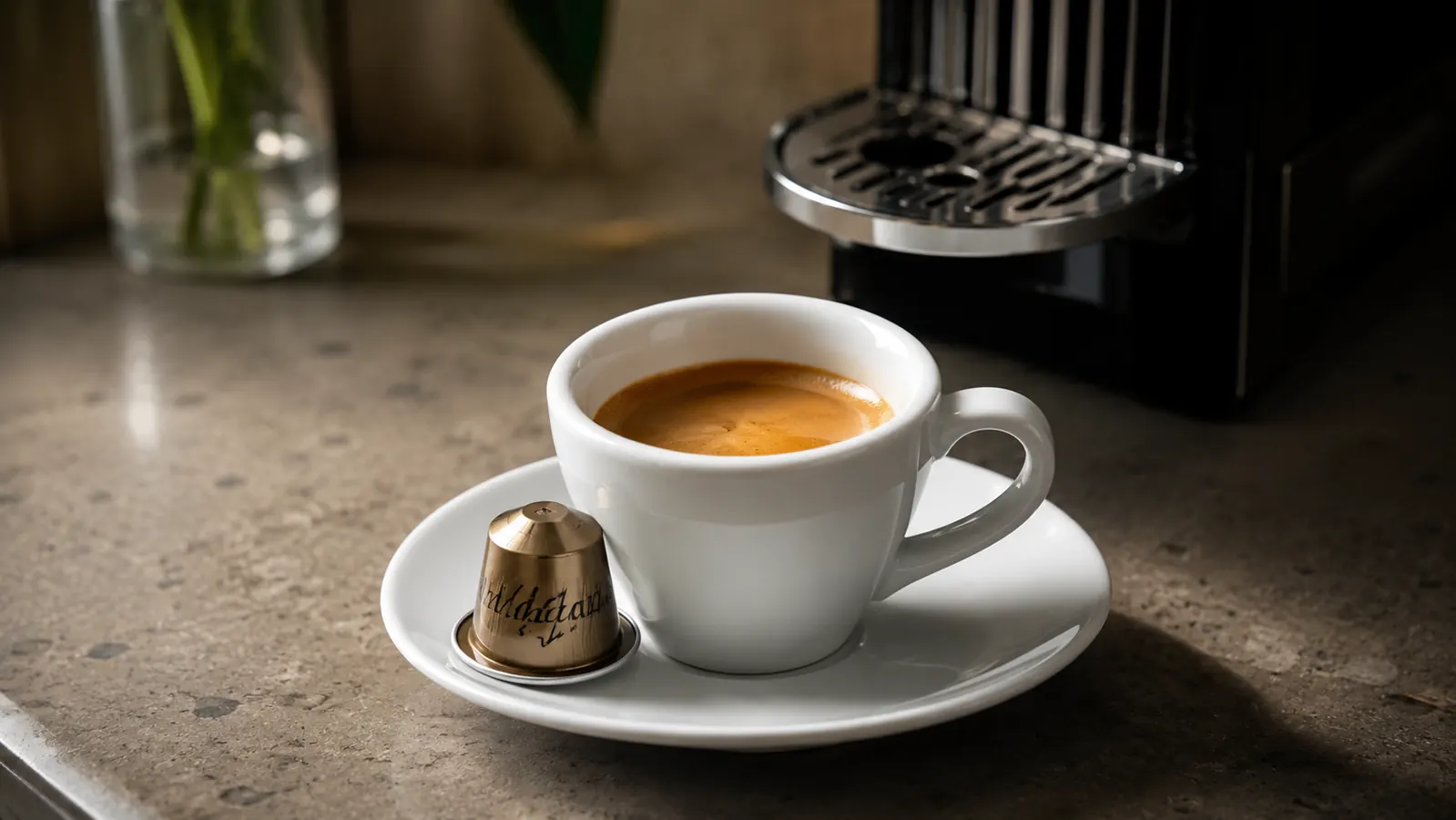
If you are paying five or six dollars a day at the coffee shop down the street, and your apartment kitchen has about twelve inches of free counter space, the Nespresso Inissia is probably the most useful appliance you could put in that spot. I set mine up in a studio kitchen where the coffee maker used to live, and within a week I had stopped stopping at the cafe on the way to work. But getting truly good espresso out of it, the kind with a proper crema layer and a flavor that actually holds up, takes a few small adjustments beyond just pressing the button. This guide walks through every step so you get that result from the first week.
The Nespresso Inissia by De'Longhi runs on a 19-bar pump, heats up in 25 seconds, and holds 24 ounces of water in a removable reservoir. It weighs less than four pounds and takes up roughly the same counter footprint as a large coffee mug. The machine is designed around the OriginalLine capsule system, which gives you access to more than 30 Nespresso blends plus a wide range of compatible third-party capsules. Those two things, the pump pressure and the capsule variety, are what make this machine capable of producing real espresso rather than just strong drip coffee. But only if you use it correctly.
Still paying coffee-shop prices for a morning espresso you could pull at home in 30 seconds?
The Nespresso Inissia is small enough for a studio counter and powerful enough for a genuine 19-bar shot. Check the current price on Amazon before you spend another week on the cafe line.
Amazon Check Today's Price on Amazon →Step 1: Unbox and Rinse the Machine Before Your First Shot
Before you pull your first espresso, run a rinse cycle. Fill the water tank to the max line, place a mug on the drip tray, and press and hold the espresso button for three seconds until the machine enters the rinse flow. The Inissia will push plain hot water through the brewing system without a capsule. This flushes out any residue from the factory and from shipping. Do this twice. The water that comes out will have a faintly metallic smell the first time. By the second rinse it will smell neutral. Do not skip this step. Your first actual espresso will taste noticeably cleaner if you do the rinse first.
While you are getting set up, check that the drip tray is seated properly and that the capsule container underneath it is locked in place. The Inissia ejects used capsules automatically into a small container that holds about ten shots before it needs emptying. If that container is not seated, used capsules can jam the mechanism. Give everything a push-click before you brew the first cup.
Step 2: Pick the Right Capsule for the Shot You Actually Want
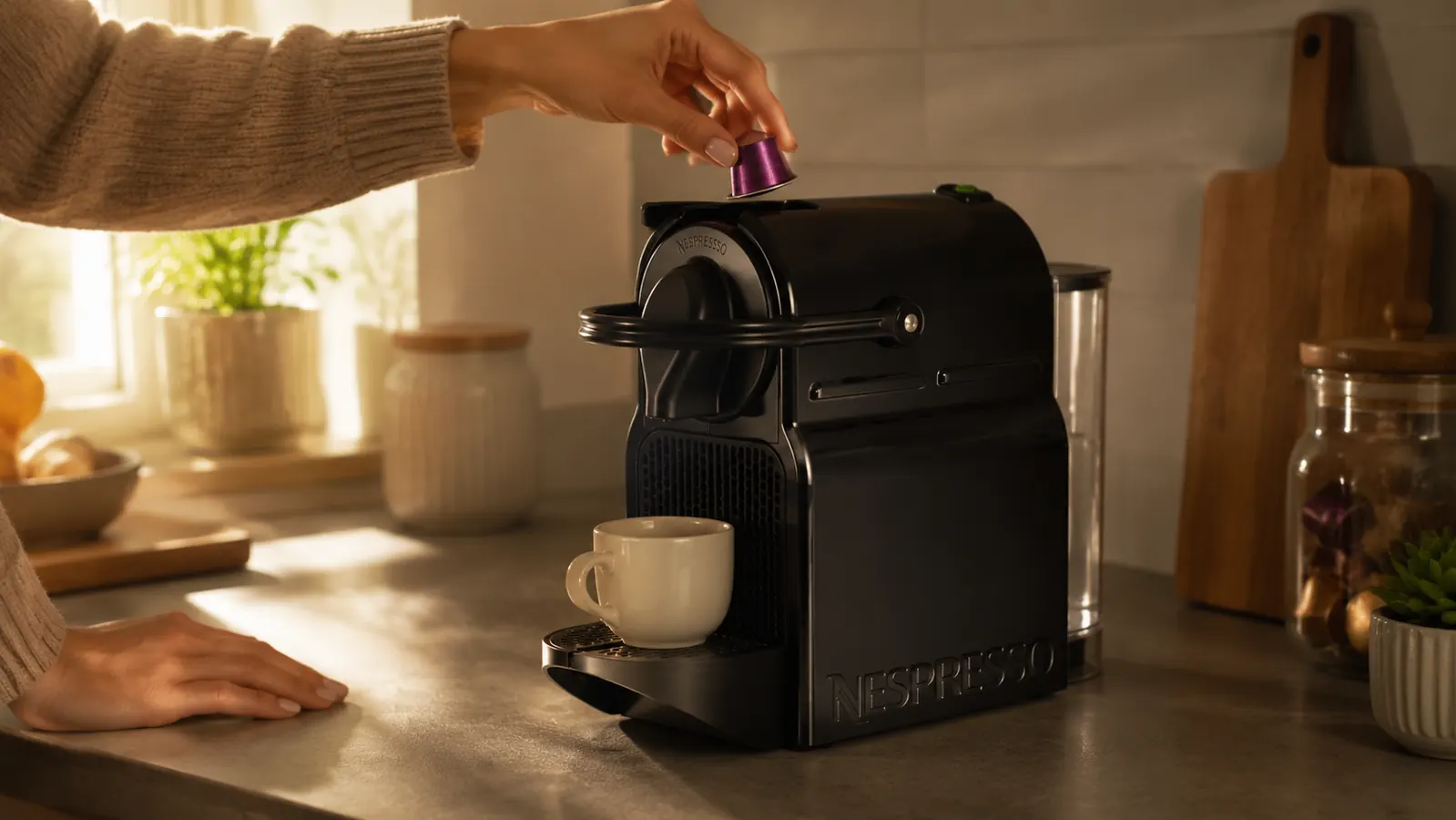
This is where most people get stuck. Nespresso sells capsules numbered by intensity on a scale of roughly 4 to 13. A higher number means more roast darkness and caffeine concentration, not necessarily more flavor complexity. For a classic short espresso (about 1.35 oz), I reach for intensity 9 to 11. The Arpeggio (intensity 9) is one of the most consistently good capsules in the lineup: smooth, with a chocolate undertone and a crema that holds for a solid 30 seconds. The Ristretto (intensity 10) is a bit bolder and slightly more acidic. For mornings when you need something that wakes you up fast, the Kazaar at intensity 12 is the strongest in the standard lineup.
If you are making a lungo (about 3.7 oz), go with something in the intensity 4 to 6 range, like the Livanto (intensity 6). High-intensity capsules brewed lungo turn bitter fast because the extra water pulls more tannins from the grounds. Think of it the way you would a pour-over versus a French press: different methods suit different roasts. One more tip: store your capsules out of direct sunlight and away from strong-smelling foods. The foil seal is thin, and capsules left near a spice rack can pick up ambient odors over a few weeks.
Step 3: Set the Shot Volume to Match Your Cup
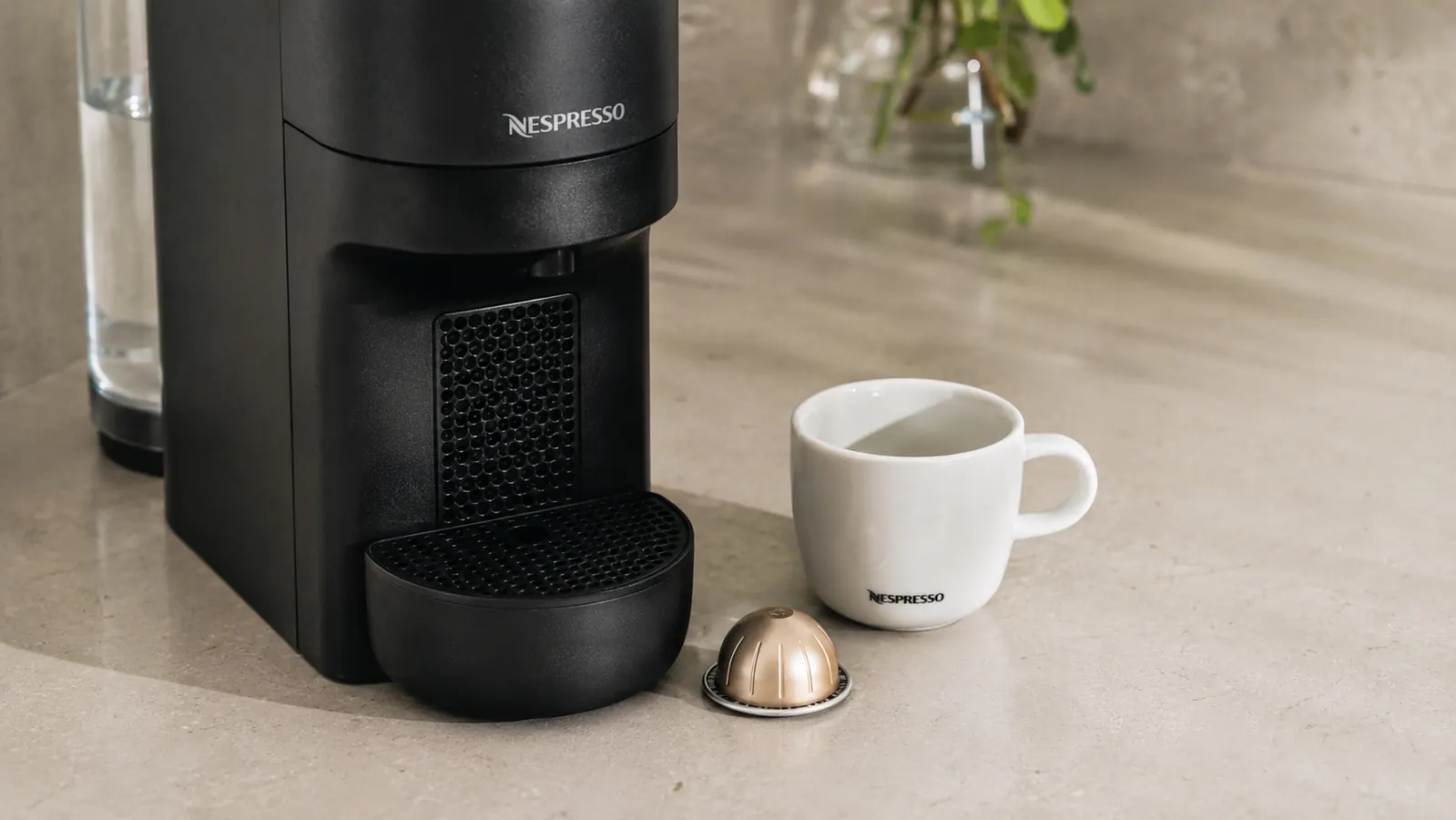
Out of the box, the Inissia defaults to two preset volumes: espresso (1.35 oz) and lungo (3.7 oz). These defaults are reasonable starting points, but you can reprogram them to match your favorite mug or demitasse. To reprogram the espresso button, insert a capsule, place your cup, and press and hold the espresso button. The machine will start dispensing. When you have the volume you want, release the button. The machine saves that amount going forward. To reset to the factory default, hold both buttons simultaneously for three seconds.
For a proper espresso with good crema density, I find that 1.2 to 1.4 oz is the sweet spot on the Inissia. Going much over 1.5 oz with a single capsule starts to thin the crema and dilute the flavor. If you want a larger drink, add steamed or frothed milk separately rather than increasing the shot volume. The machine does not have a built-in frother, but a cheap handheld frother or a small stovetop milk steamer works perfectly alongside it.
Step 4: Pre-Heat Your Cup for a Better Shot
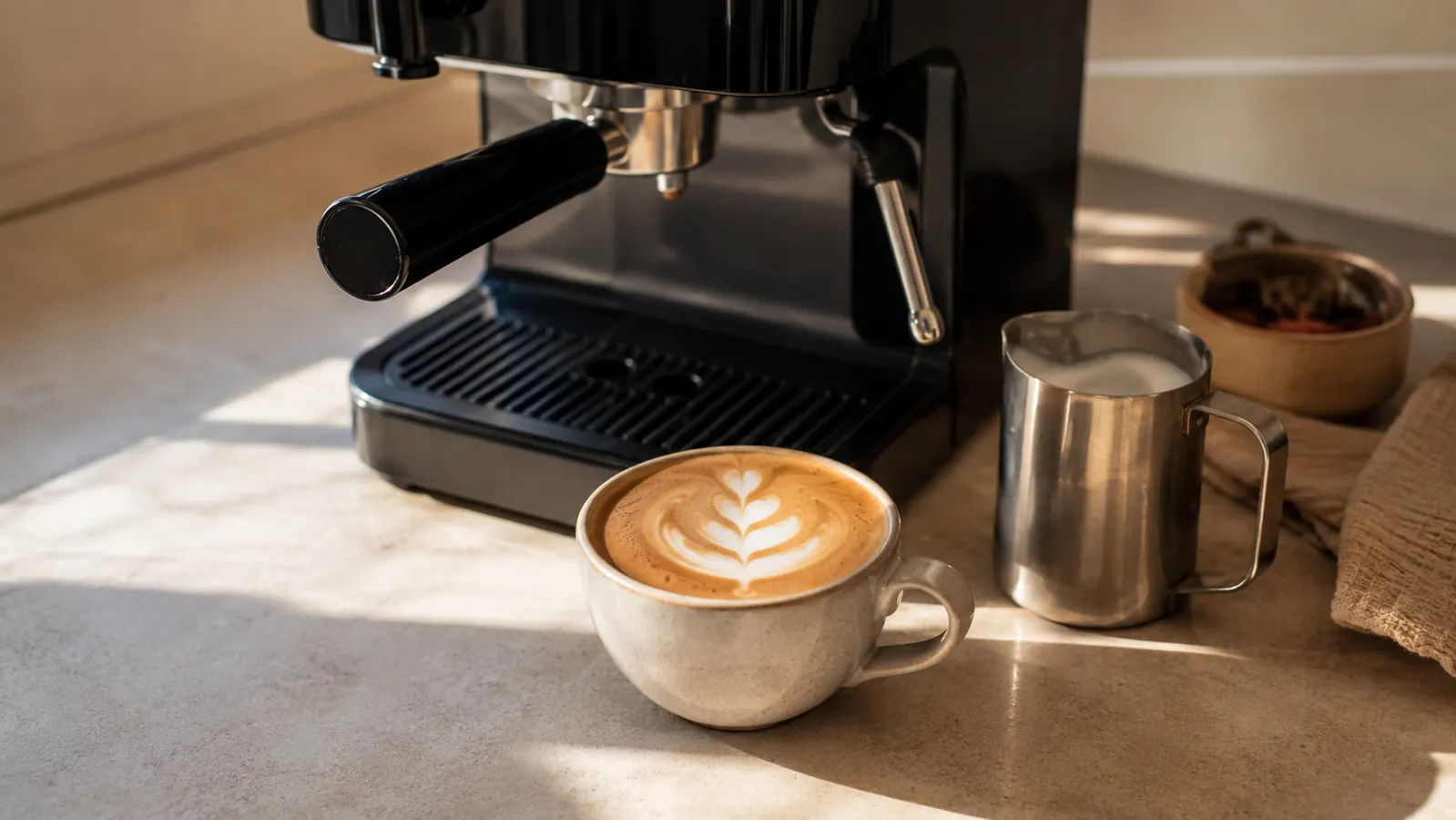
This sounds fussy, but it makes a real difference with a machine this compact. The Inissia's boiler heats water to around 190 degrees Fahrenheit. When that water hits a cold ceramic cup, the surface temperature of the espresso can drop six to eight degrees in the first few seconds. That drop affects both the flavor release and the crema stability. A simple fix: run the rinse cycle (no capsule) directly into your demitasse to warm it up, then dump that water before your actual shot. The whole process takes about 45 seconds and you will notice the difference in crema quality immediately.
Alternatively, fill your cup with hot tap water while the machine is warming up and dump it right before you brew. Either method works. If you are making back-to-back shots for two people, the second shot always comes out slightly better because the machine and the cup are already at operating temperature. The first shot is where the warm-cup habit pays off most.
Pre-heating the cup takes 45 seconds and is one of the easiest ways to get more crema out of every shot. Cold ceramic kills it fast.
Step 5: Clean and Descale on a Regular Schedule
The Inissia will tell you when it needs descaling: both buttons blink simultaneously for a few seconds after a shot. If you have moderately hard water (common in cities), you will see this indicator roughly every two to three months with daily use. Descaling takes about 20 minutes and requires a descaling kit, which Nespresso sells separately. Do not skip it. Calcium buildup inside the boiler raises brew temperature unevenly, which flattens the crema and makes the coffee taste metallic. Once I started descaling every ten weeks without waiting for the blink alert, the shot quality became noticeably more consistent week over week.
For daily cleanup, empty the used capsule container every ten shots. The spent capsules are damp and if you leave them sitting for more than a day or two they will start to mold. Rinse the drip tray under the tap every few days. The water tank is removable and dishwasher-safe on the top rack. Run a plain water rinse through the machine every week (no capsule, just the rinse cycle) to flush coffee oils out of the internal lines. This weekly rinse is the single biggest factor in keeping the machine tasting clean between descaling cycles.

What Else Helps
Water quality matters more than most people expect. If your tap water has a strong chlorine taste, the espresso will reflect that. A basic filtered pitcher or a simple faucet filter brings the taste of the water into a neutral range that lets the capsule's flavor come through cleanly. I use a Brita in a one-bedroom apartment kitchen, and the improvement over tap water was immediate. If you are on well water or in an area with very hard water, a filtered source will also extend the time between descaling cycles.
If you want to expand what the Inissia can make, a handheld milk frother changes everything. You can heat a small amount of milk in the microwave for 45 seconds, froth it with an inexpensive wand, and pour a flat white or cappuccino on top of your Nespresso shot. The machine itself is the espresso engine; the rest of the cafe menu is just about what you add to it. For a small kitchen, this approach takes up far less counter space than any espresso machine with a built-in steam wand.
Third-party compatible capsules are also worth exploring once you have the machine dialed in. Brands like Peet's, Starbucks, and Lavazza all make OriginalLine-compatible capsules that fit the Inissia perfectly. Starbucks makes an intensity 11 capsule that has a different flavor profile from anything in the Nespresso house lineup and costs a bit less per pod when bought in a multipack. Trying a few brands is the fastest way to figure out exactly which roast suits your morning.
Finally, if you share the machine with a partner or roommate who prefers different volumes or roasts, the programmable button makes that easy to manage. Program the espresso button to the volume one person prefers, and use the lungo button (also programmable) for the other. You can customize both buttons independently and re-program either one in about 10 seconds whenever preferences shift.
The Inissia is one of the most compact 19-bar machines you will find at this price point.
If a daily cafe run is eating your budget and you have a few inches of counter space, this machine pays for itself fast. See the current price and in-stock colors on Amazon.
Amazon Check Today's Price on Amazon →