
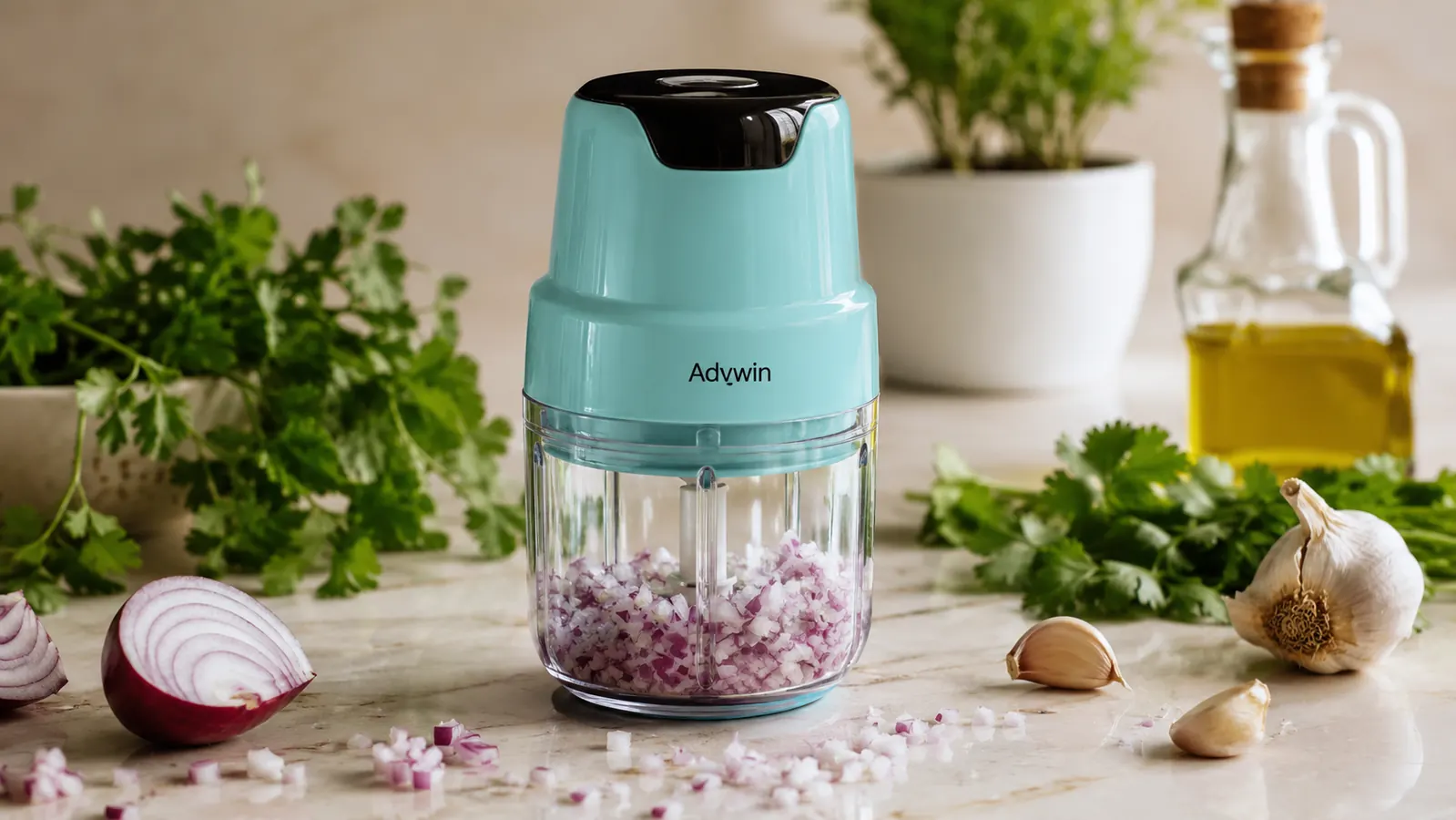
I want to be honest with you about something: the first time I looked up the KitchenAid 3.5 Cup Food Chopper, I almost bought it immediately. Over 30,000 reviews on Amazon, a 4.6-star average, and a name everybody recognizes. That sounds like a done deal. But I have bought enough appliances based on review counts alone to know that crowds sometimes miss things. So before you hand over your money, I want to walk you through what those 30,000 reviews mostly agree on, what a surprising number of them gloss over, and exactly who this chopper is and is not right for.
The short version: the KitchenAid 3.5 Cup Food Chopper (model KFC3516AQ in the Aqua Sky colorway) earns its reputation for a specific kind of cook in a specific kind of kitchen. If you match that profile, it is one of the better tools you can put on your counter. If you do not, the investment could be a frustrating mistake. Let me tell you which one you are.
The Quick Verdict
A genuinely capable mini chopper that excels at quick-prep tasks for one or two people, but the 3.5-cup capacity and single-speed motor will disappoint anyone hoping to replace a full-size food processor.
Amazon Check Today's Price →Already sold on the KitchenAid name but not sure if the size is right for you?
This model comes in multiple colors and ships with the S-blade and a dough blade. Check current availability and pricing below before reading the full breakdown.
Amazon Check Today's Price on Amazon →What Nobody Tells You About the 3.5-Cup Capacity
Here is the thing about 3.5 cups: it sounds like plenty until you try to chop a full onion. A medium yellow onion, cut into rough quarters, fills that bowl to the maximum fill line. You cannot pack it in and close the lid. You chop half, transfer it to a bowl, then chop the other half. That is two runs, two lid-pops, two transfers. For most weeknight cooks, that is still faster than hand-chopping. But if you imagined tossing a whole onion in and walking away, I need to reset your expectations.
The same constraint shows up with garlic and herbs. You can mince four to six garlic cloves in about eight seconds, which is genuinely useful. But if a recipe calls for a full head of roasted garlic, you are doing this in batches. For a single serving or a recipe for two, the capacity is almost always fine. For meal-prep Sunday where you are chopping vegetables for the whole week, this is the wrong tool. I say that not to talk you out of it, but because knowing this upfront saves a lot of buyers' remorse.
The Motor: Strong Enough, With One Honest Limitation
The KitchenAid chopper runs on a 240-watt motor. That is plenty for soft vegetables, fresh herbs, cooked chicken, nuts, and most dips. I ran chickpeas through it for hummus and got a smooth result in about 45 seconds with a couple of oil additions. Salsa came out beautifully, with a texture I could actually control by watching through the clear bowl. Fresh ginger, shallots, sun-dried tomatoes, all handled cleanly.
Where the motor shows its limits is with raw dense vegetables and harder items. Raw carrots work, but only if you cut them into coin-sized pieces first. Whole raw almonds need multiple pulse sessions and you will hear the motor working. Frozen fruit is a no-go. This is not a defect; it is just the nature of a 240-watt compact unit. Compare it to a full-size food processor running 700 or 800 watts and you are dealing with a fundamentally different class of machine. The KitchenAid handles the prep tasks that actually come up most often in home cooking. It just does not pretend to be something it is not, and neither should your expectations.
The Controls: One Speed, Pulse, and Why That Is Usually Enough
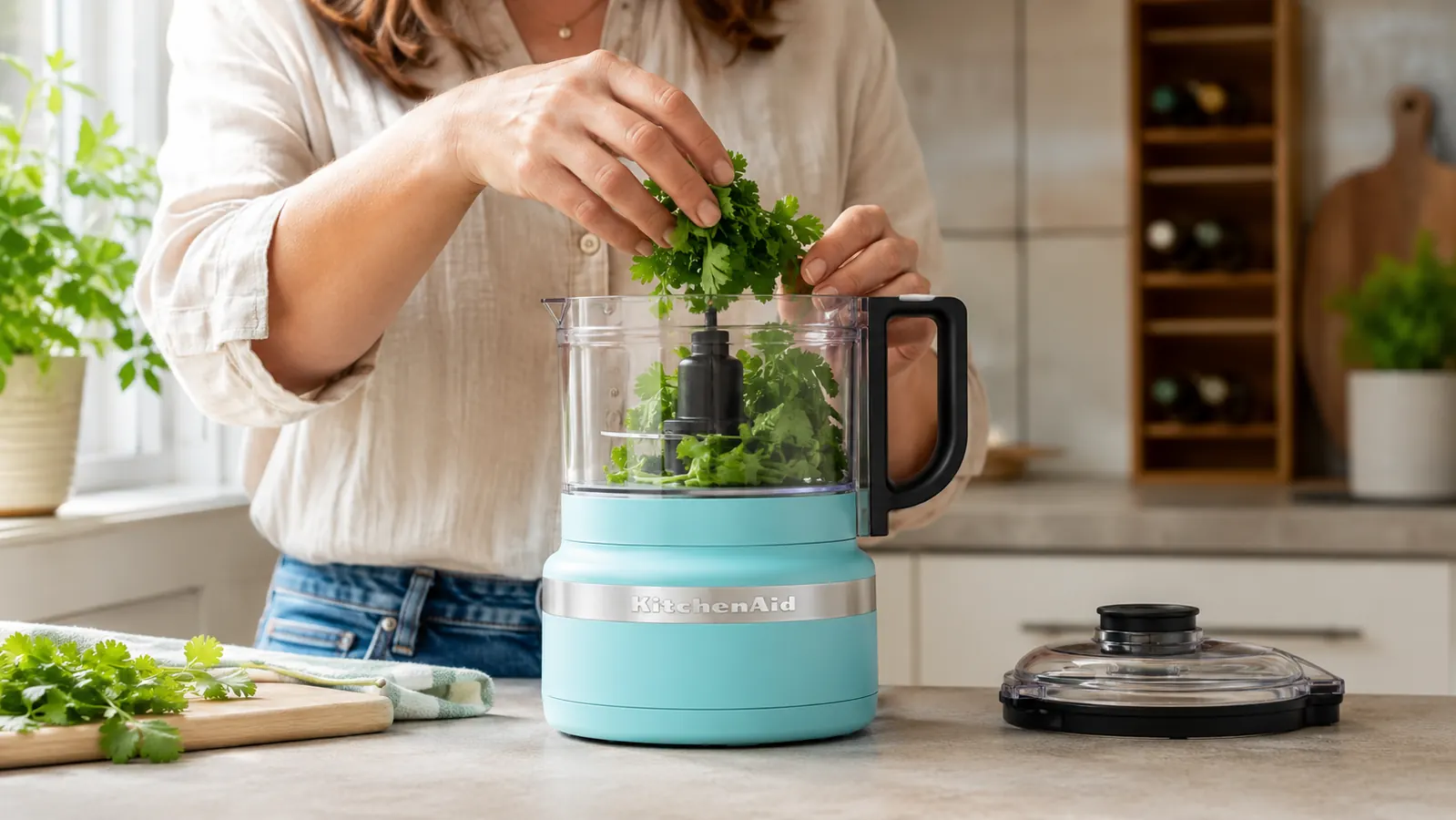
The KitchenAid chopper has two actions: pulse and continuous run. That is it. You press and hold for pulse, or press once to run continuously. If you have used a high-end food processor with multiple speed settings, this will feel simple. It is. And for most of what you are actually doing with a mini chopper, simple is fine.
Pulse gives you control, which matters most. Ten short pulses on an onion gets you a rough chop. Twenty gets you a fine dice. Another ten and you are approaching puree. You learn this in about three uses and it becomes second nature. The one thing I wish the design included was a clearer indication of when the motor is near capacity, because there is no speed indicator or load light. You just listen. If the motor sounds labored, stop and cut your ingredients smaller. That is actually good practice with any mini chopper, but it would be nice if the machine made it more obvious.
Cleanup: The Real Reason People Love It (and One Frustration)
The bowl, blade, and lid are all dishwasher safe. That is the single most cited reason people recommend this chopper to friends. In a small kitchen where counter space and time are both scarce, not having to hand-wash a greasy bowl is a genuine quality-of-life improvement. The bowl goes on the top rack, the blade goes in the silverware basket, and the lid lies flat on the top rack. Three pieces. Done.
The frustration: the bowl attachment requires a specific twist-and-lock motion to seat properly onto the base. It took me four or five tries before I internalized the angle. Once you get it, it is fast. But out of the box, the first few sessions feel clunky. Several one-star reviews cite this as a design flaw and I understand the irritation, even if I think most people get past it quickly. If you hand this to someone who has never used it and they try to run it without properly locking the bowl, the safety mechanism will prevent the motor from starting. That is a good safety feature, but it reads as a malfunction to someone who has not read the manual.
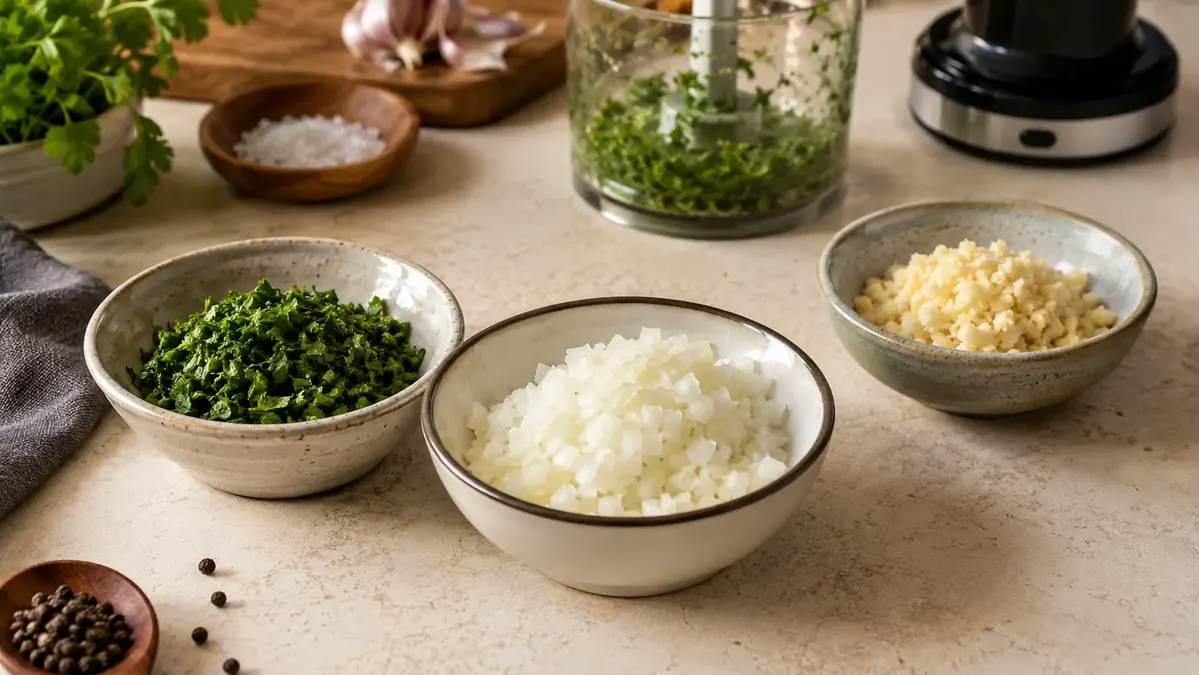
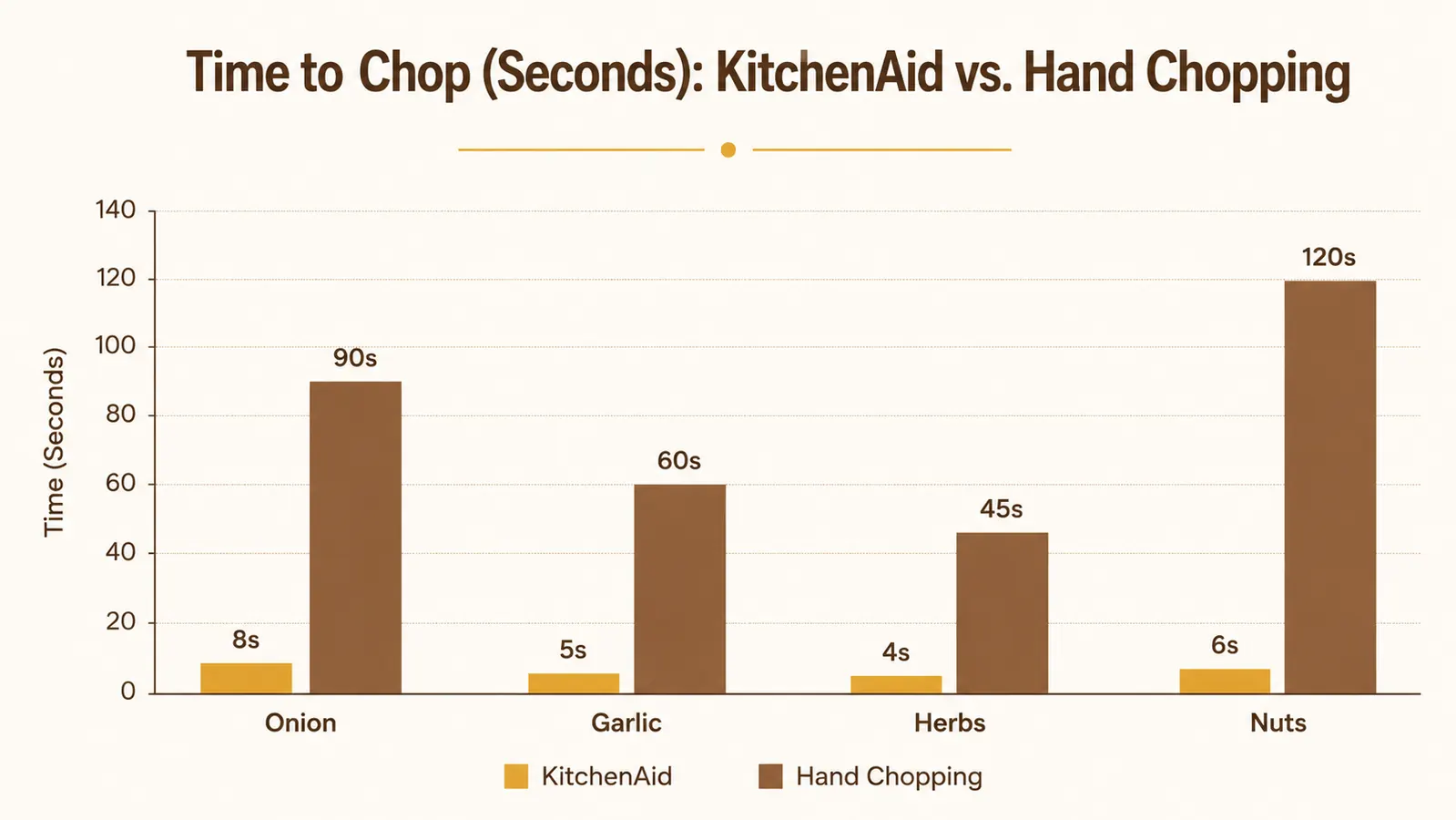
The KitchenAid chopper is not competing with a full-size food processor. It is competing with the 20 minutes you spend hand-chopping the same vegetables on a Tuesday night. On that comparison, it wins consistently.
What the 30,000 Reviewers Mostly Agree On
The crowd consensus is not wrong. The build quality is noticeably better than budget mini choppers in the lower price range. The base has weight and grip. The bowl feels thick, not hollow or brittle like the plastic on cheaper units. The S-blade is sharp and stays sharp through normal use. The color options, including the Aqua Sky, are genuinely attractive and hold up without fading or staining. For a small-kitchen appliance, looking good on the counter matters because it is going to be visible.
The reliability reports over multiple years of ownership are also encouraging. Reviewers who bought the chopper two or three years ago and come back to update their review mostly report that it still works the same as day one. That is not nothing. Cheap mini choppers tend to develop wobbles, dull blades, or cracked bowls within a year of regular use. The KitchenAid appears to hold its quality over time, which partly justifies the premium over budget options.
What the Crowd Glosses Over
Here is where I will push back on the overall narrative a little. A lot of the five-star reviews are written by people who received the chopper as a gift or who owned a much cheaper model before this one. That context inflates the ratings. If your previous chopper was a budget unit that vibrated across the counter and cracked its bowl in month three, the KitchenAid is going to feel revelatory. If you owned a Cuisinart Mini-Prep before this, the difference is real but smaller.
The other thing reviewers skip: the noise level. This chopper is not quiet. It is not the loudest kitchen appliance I have used, but in a studio apartment at 7am, it is noticeable. If you share walls with neighbors or share a space with light sleepers, that is worth factoring in. It runs for 8 to 10 seconds most of the time, which is brief, but it is not a polite hum.
I also want to be transparent that the price has drifted upward over time. At the current price, you are paying a meaningful premium over the Cuisinart Mini-Prep Plus, which can be found for less and does many of the same tasks. The KitchenAid is better built and better looking, but the performance gap on everyday tasks is not 2x. You are paying some of that premium for the brand name and the color options. That is a real thing people value, and there is nothing wrong with valuing it, but you should know that is partly what you are buying.
What I Liked
- Genuinely durable build quality that holds up over years of regular use
- Dishwasher-safe bowl, blade, and lid reduce cleanup to under a minute
- Sharp S-blade handles herbs, garlic, onion, nuts, and soft vegetables without prepping
- Attractive color options look at home on a small-kitchen counter
- Compact footprint stores easily in a cabinet or on a shelf
- Safety interlock prevents the motor from running if the bowl is not properly locked
Where It Falls Short
- 3.5-cup capacity requires batching for any recipe serving more than two people
- 240-watt motor struggles with raw dense vegetables and harder nuts without pre-cutting
- Bowl lock mechanism has a learning curve that confuses first-time users
- Noticeably louder than you might expect for short tasks
- Price premium over budget alternatives is only partially justified by performance
Who This Is For
The KitchenAid 3.5 Cup Food Chopper is an excellent fit if you cook for one or two people most nights, you hate hand-chopping onions and garlic, your kitchen has limited drawer or shelf space, and you want something that will look good and hold up for years rather than something that will break in eighteen months. If you are in a first apartment and building your kitchen from scratch, this is a smart choice that you will not outgrow quickly. If you care about aesthetics, the color options genuinely make a difference on a small counter.
It is also a good fit if you already own a full-size food processor but want something smaller for quick weeknight tasks. Pulling out a large machine for three cloves of garlic is overkill. Having this on the counter or in an easy-to-reach cabinet means you actually use it, which is the whole point.
Who Should Skip It
If you regularly cook for a family of four or more, the 3.5-cup bowl will frustrate you quickly. You will spend more time batching and transferring than you save on chopping. A larger food processor is the right tool. Similarly, if your cooking style leans heavily on hard root vegetables, frozen ingredients, or large quantities of nuts, this motor is not sized for that work. And if you are price-sensitive and mainly need something to mince garlic and dice onions, the Cuisinart Mini-Prep does those jobs at roughly half the price. You lose the build quality and the color options, but the functional output on basic tasks is closer than the price gap suggests.

Is It Worth It?
For the right cook, yes. The KitchenAid 3.5 Cup Food Chopper earns its price through durability, dishwasher convenience, and the quality-of-life improvement of having a reliable, attractive mini chopper on your counter. The bowl-lock learning curve is real but temporary. The capacity limit is real and permanent. If you cook for one or two people and you want a tool that will be in your kitchen five years from now looking and working the same as day one, this is a purchase you will not regret. If you are hoping for a full-processor replacement or a machine that handles larger batches, you will be disappointed regardless of how many reviewers say otherwise.
Thirty thousand reviews are worth something, but they are not a guarantee. They are a signal that this product works well for a large number of people. The question is whether your kitchen and your cooking habits match that profile. I hope this review gives you a clear enough picture to answer that honestly for yourself. If you want to see how it stacks up against the competition in a direct head-to-head, check out the KitchenAid vs Cuisinart Mini-Prep comparison. And if you are already leaning toward this chopper and want ten more reasons it earns its spot on a small-kitchen counter, the 10 reasons the KitchenAid earns counter space article breaks that down one by one.
If a 3.5-cup bowl and a dishwasher-safe cleanup sound like exactly what your Tuesday nights need, this is your chopper.
The KitchenAid 3.5 Cup Food Chopper comes in over ten colors, ships with the S-blade and dough blade, and is backed by the KitchenAid warranty. Check today's price and in-stock color options on Amazon.
Amazon Check Today's Price on Amazon →